


Flooding, Galamsey and Filth, Undermining Ghana’s Climate Resilience
Nana Kofi Barfour
nbobonsu@gmail.com
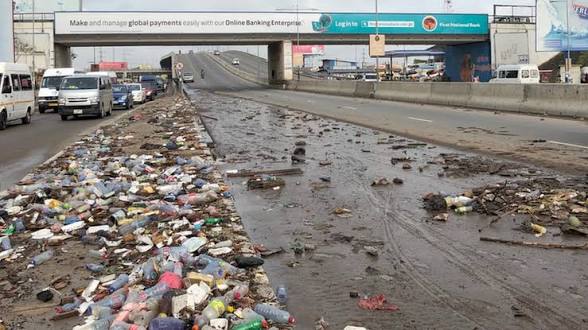
The stories are all too familiar when you think of a rainy day in the metropolis of Accra. Floodwaters swallow up roads. It becomes terrifying watching roads disappear, vehicles stall, families scramble to save their belongings while traders watch in horror as goods worth thousands of Ghana cedis are destroyed within hours beneath this moving catastrophe.
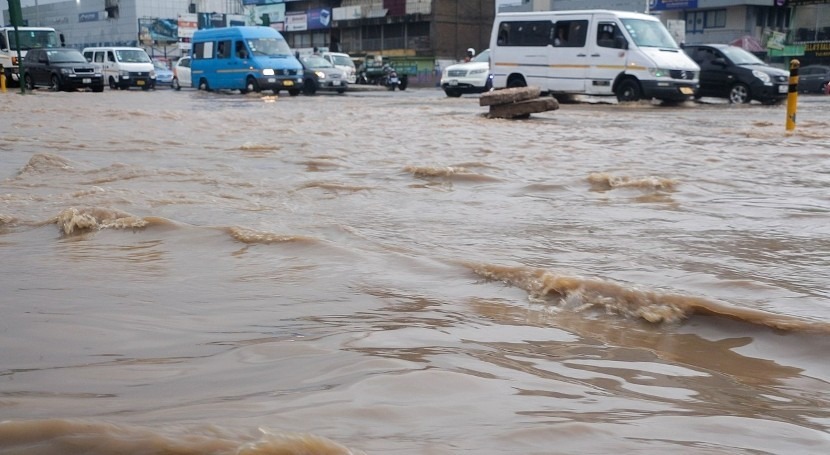
Meanwhile, rivers that once upon a time sustained farming communities run useless with sediments from illegal mining “galamsey” activities. Plastic waste and refuse clog drains and waterways in many urban areas, waiting for the next rains to trigger another disaster to occur. The events for many Ghanaians have become a norm. Yet they are more than seasonal inconveniences. They are clear evidence of signs of growing environmental crisis that is increasingly eroding Ghana’s capacity adopt to climate change.
Often portrayed as a global challenge driven by rising temperature, industrial emissions, and international negotiations, climate change in Ghana, however is experienced through local realities like flooded homes, polluted rivers, degraded forests, poor sanitation, and weakened ecosystems.
Ghana contributes to a small fraction of global greenhouse gas emissions, yet the country is has become increasingly vulnerable to climate effects mostly due to environmental degradation which occurs within its own borders. Flooding, galamsey, and urban filth have emerged as a dangerous combination, a triple threat that is undermining climate resilience, threatening livelihoods, and placing millions of people at grave risks.
When Rain Becomes a Disaster
While rainfall is essential for agricultural activities, water supply, and ecological balance, it is increasingly becoming a source of fear when the season approaches rather than relief across Ghana. Climate scientist and the Ghana Meteorological Agency (GMET) have warned that Ghana and West Africa as a whole are likely to experience more intense and unpredictable rainfall patterns as a result of climate change.
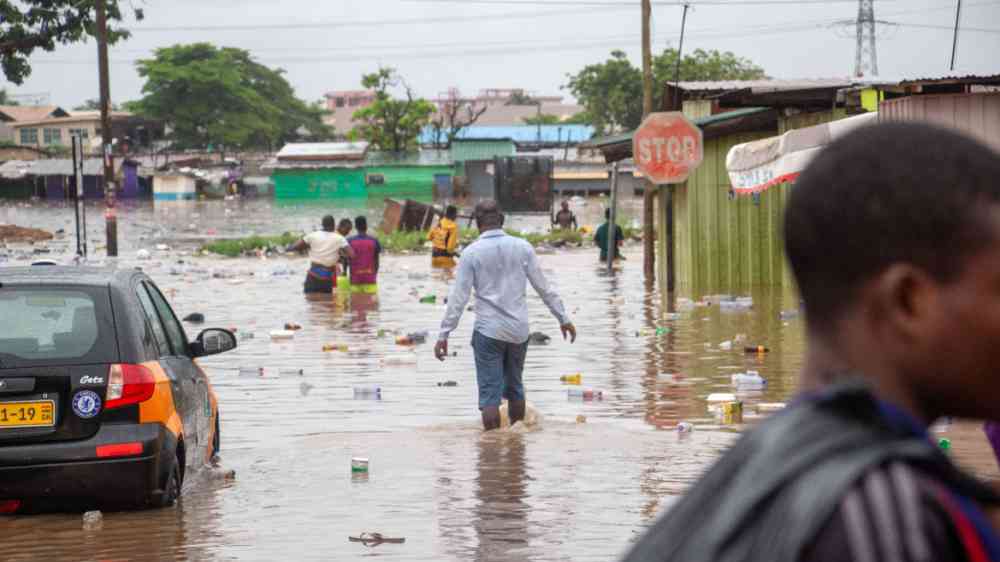
Ghana is already witnessing these drastic changes through extreme weather events, prolonged dry spells, intensive heat, and increasingly intense rain storms. However, climate change alone does not explain the devastation floods continue to cause in our communities across the country. The uncomfortable truth is, many of these disasters are worsened by human actions. Drains are frequently blocked with plastic waste and debris. Wetlands that use to absorb excess water have now been encroached by housing developments and commercial activities. These have caused natural waterways to be narrowed, diverted, or completely obstructed.
Now, in Accra and other affected communities, when the rains come, the water has nowhere to go but into people’s homes and livelihoods. The floods that have struck parts of Accra in recent years, have left thousands of residents displaced, damaged homes, and disrupted economic activities. A single flood has erased a trader’s life savings, keep kids out of school, and rob workers of theirs daily wages, leaving families to claw their way back for months.
For those already living on the edge, without insurance or safety net, it becomes a devastation that they rarely recover from. But this isn’t a story of clogged drains or poor city planning anymore. It is the harsh reality of climate change, climate adaptation challenges, and a desperate call to build a future that can withstand it.
Galamsey and the Destruction of Nature’s Climate Defence System
Before the floodwaters surge through the streets of Accra, the natural defenses that could have slowed them are often already obliterated, torn apart by the illegal mining, “galamsey.”
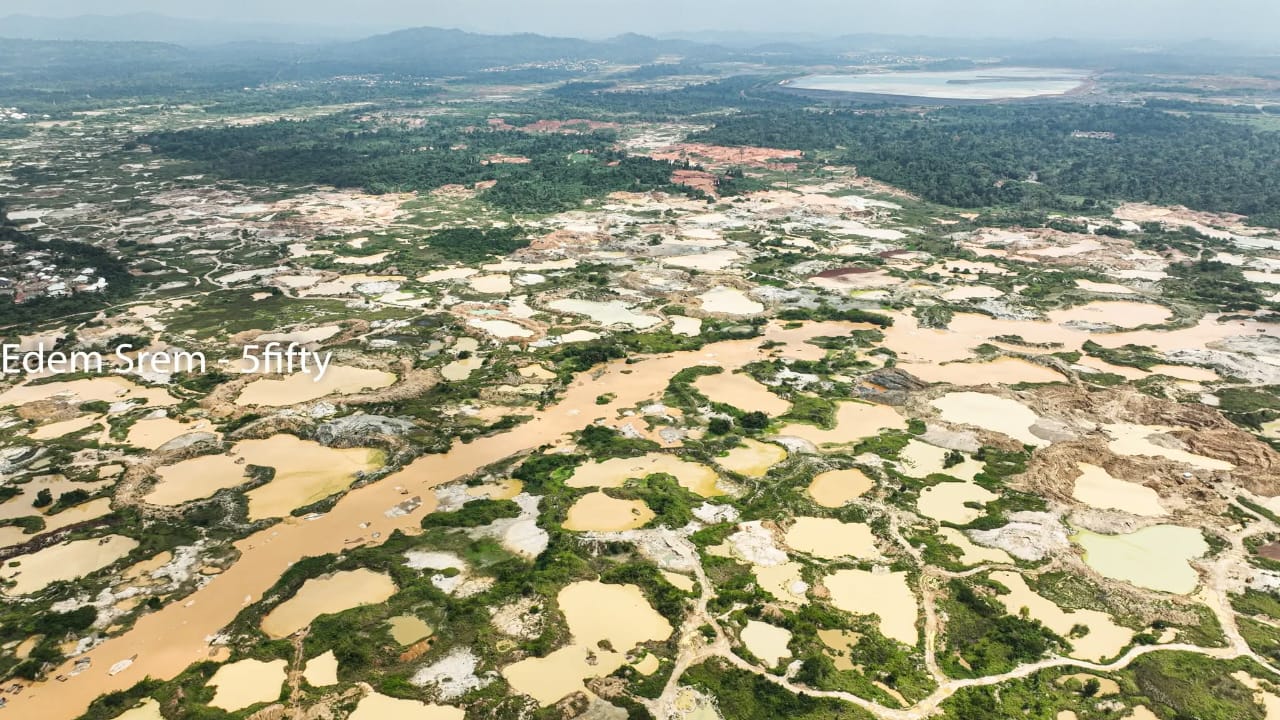
Across Ghana, forests that once absorbed carbon, cooled the land, and held fragile soils in place are being razed, turning torrential rains into weapons of mass destruction. But the devastation does not stop at the treeline. Rivers like the Pra, Ankobra, Offin, and Birim, lifelines for entire communities, are now choked with sediment and laced with heavy metals, forcing water treatment plants to fight an uphill battle just to keep taps running safely.
Yet the deepest wounds are felt in the farmlands. Cocoa trees and food crops that sustained families for generations are swallowed by excavated pits, leaving behind barren, poisoned earth. For rural households, this means shrinking harvests, empty pockets, and a future stripped of certainty. With farming no longer a viable path, many young people drift into the very mines that are destroying their inheritance, locking themselves into a self-perpetuating cycle of loss.
This is no longer just an environmental crisis, it is an assault on livelihoods, a threat to food security, and the clearest sign yet of Ghana’s ability to adapt to a changing climate.
Filth, Sanitation and the Hidden Climate Crisis
Often do we talk about urban filth as an eyesore or a nuisance to public health, something that needs to be swept away and forgotten. What we choose not see is the quiet and dangerous truth buried beneath the piles of plastic and clogged gutters. Our hard to fight waste management issues is making climate disasters even worse.
Ghana is seeing fast-growing cities with high rise building and estate development, yet garbage chokes the very drains that should carry rainwater away. Blocked waterways turn what should be an ordinary storm into urban floods when the downpour comes, sending contaminated water mixed with sewage industrial sludge, and household refuse, surging into streets and homes.
This is not just telling tales about lost property. It is about children wading through toxic floodwaters just to reach their classrooms, and mothers spending sleepless nights taking care of families struck with cholera and typhoid in the wake of storms. Many shop owners in a single flood can lose their entire inventory, goods they have invested months of savings to stock. Most women have to carry the load of caregiving and cleanup in the most part, recovery stretches long after the water recede.
These are human costs that are rarely put into consideration and framed as climate issues. They are dismissed as sanitation failures, or worse, as inevitable city challenges. But the simple truth is blunt: you cannot build climate resilience from a foundation of broken drains and overflowing landfills. If our waste management practices are not intensified, then we cannot manage our water. And if we cannot manage our water, we cannot protect our people. This cannot be just an environmental problem; it is a litmus test for whether Ghana’s climate response will actually yield results and reach the people who needs it the most.
Climate Change Is No Longer an Environmental Issue Alone
The greatest misconception about climate change is that it is primarily an environmental problem, but in reality, it has become a development challenge, a governance challenge, a health challenge, and a human security challenge.
When a market woman loses her entire stock to floodwaters, climate resilience has failed. When a farmer abandons productive land because illegal mining has rendered it unusable, climate adaptation has failed. When a child misses school because roads are flooded or household income has been lost to environmental disasters, climate resilience has failed.
These impacts fall hardest on those least responsible for creating the problem: low-income households, informal workers, women, children, rural communities, and vulnerable populations with little capacity to recover from repeated shocks.
Climate adaptation is therefore not merely about preparing for future risks, it is about protecting livelihoods, safeguarding public health, ensuring water security, and preserving human dignity, right here and right now.
The Cost of Looking Away
We often treat environmental degradation as a distant worry, something for tomorrow, for our children, for some future reckoning. But Ghana is paying the price today, in real and painful ways: roads and bridges washed out, harvests shrinking, hospital bills climbing from preventable diseases, businesses grinding to a halt, and disaster crews scrambling after every downpour.
Every polluted river chips away at the water a family can safely drink. Every hectare of lost forest weakens the land’s natural ability to heal itself. Every blocked drain turns a regular storm into a neighbourhood disaster. Every unmanaged waste dump becomes a breeding ground for sickness that hits the poorest first.
Taken together, these daily assaults undermine our national development and leave us less able to stand firm against a changing climate. And at a moment when the rest of the world is pouring billions into adaptation, Ghana simply cannot afford to weaken its own defences through neglect we could have prevented.
Building Climate Resilience from the Ground Up
The answer lies not only in national climate strategies, t also lives in the hands of communities, districts, and regions where resilience is built or broken. Local assemblies must step up enforcement, shield wetlands and waterways, fix clogged drains, and bake climate risks into every development decision they make.
The fight against galamsey cannot lose urgency: polluted rivers and scarred lands must be restored, while mining-affected communities are given real alternatives to survive. Waste systems cry out for a shake-up, better collection, recycling, and education to shift how people think about rubbish and their role in protecting their surroundings.
But government alone cannot carry this weight. Traditional chiefs, churches and mosques, civil society groups, business owners, schools, and ordinary citizens all have skin in this game. Environmental protection is not a task to be delegated, it is a shared responsibility we carry from the ground up, together.
From Crisis to Opportunity
Despite the weight of these challenges, Ghana stands at a crossroads where environmental vulnerability can be turned into climate resilience, if we choose to see our forests, rivers, wetlands, and city spaces not just as resources, but as strategic assets for survival.
Every galamsey site reclaimed is a step toward a stronger future; every watershed restored means cleaner water for families; every tree planted rebuilds nature’s shield; every drain cleared protects a neighbourhood from the next flood; every tonne of waste managed properly creates healthier, safer communities.
The real path to resilience does not begin in distant conference halls or international agreements, it begins right where we live: in our neighbourhoods, along our rivers, on our farms, among our forests, and in the shared determination of our communities.
A National Call to Action
Ghana stands at a critical crossroads, and the recurring cycle of floods, environmental degradation, and sanitation failures can no longer be dismissed as just the way things are, they are urgent warning signs demanding action.
Tackling floods, fighting galamsey, fixing waste management, restoring degraded lands, and strengthening environmental rules are not separate tasks; they are all part of the same struggle to build climate resilience. If Ghana truly wants a sustainable future, protecting the environment must become a national duty, not a seasonal headline we turn to only when disaster strikes.
The climate crisis may be global, but resilience is built locally, in the choices we make today about our rivers, forests, drains, and communities. Those choices will decide whether our children inherit a country strong enough to weather what comes, or one overwhelmed by its own neglect. This is the moment. The time for action isn’t tomorrow. It’s now.
Nana Kofi Barfour (Paul Osei-Bonsu)
nbobonsu@gmail.com

