

ARE WE DEALING WITH POOR DRAINAGE, HUMAN ACTIVITY, OR SOMETHING ELSE IN ACCRA’S FLOODING CRISIS? Part 1

…The Human Cost of Ghana’s Annual Flood Disaster
By: Rev. Immanuel Wiafe
As another devastating downpour leaves families homeless, claims lives and destroys property, the nation must confront the uncomfortable truth behind Accra’s recurring floods.
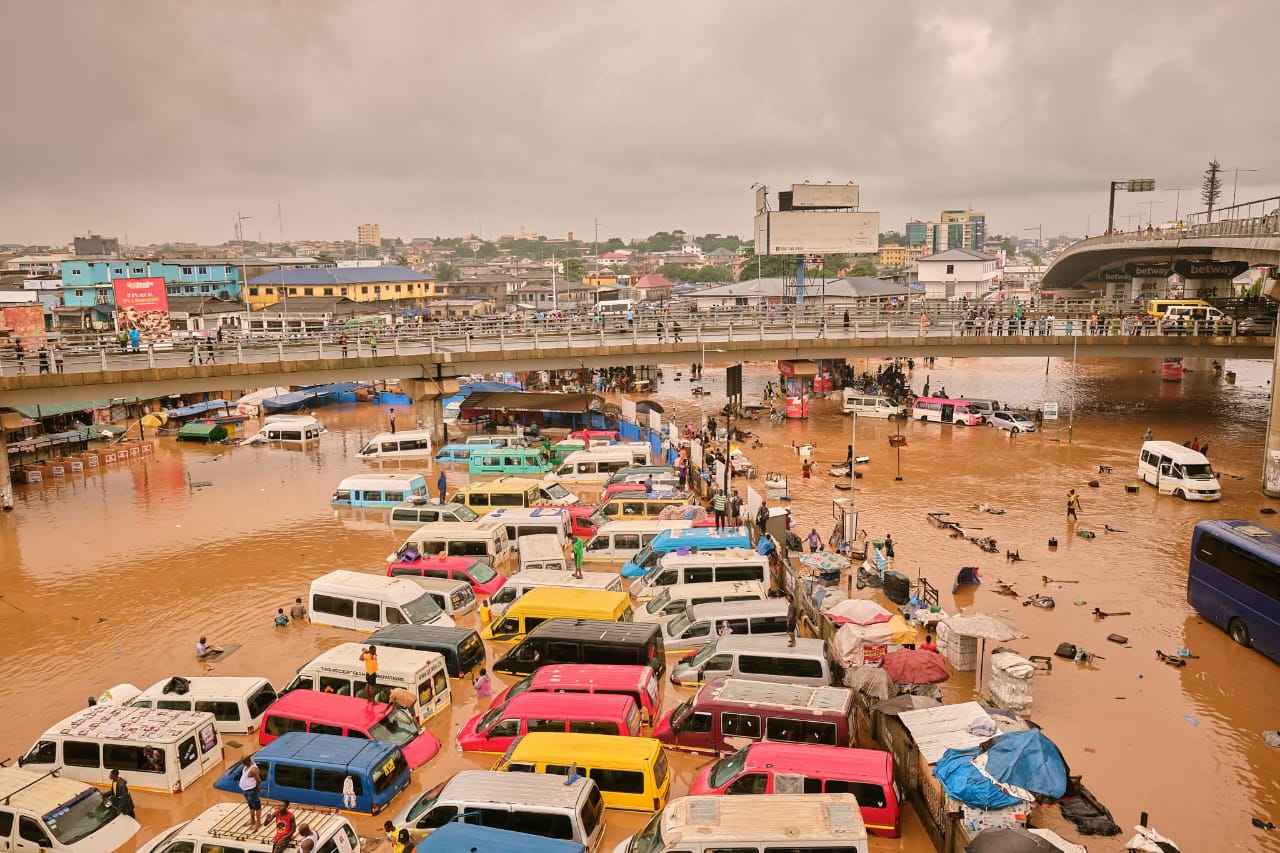
Once again, the skies opened over Accra, and within hours the nation’s capital was transformed into a city of flooded streets, submerged homes, stranded commuters and grieving families. The torrential rains that swept across Greater Accra on Sunday night into Monday left behind a familiar trail of destruction loss of lives, displaced residents, damaged homes, stalled businesses and millions of cedis in economic losses. Authorities also warned that further rainfall could worsen conditions in the coming days.
For thousands of Ghanaians, the disaster was not merely another weather event. It was a painful reminder that flooding has become an annual national emergency rather than an exceptional occurrence.
The disturbing question therefore remains: Are Accra’s floods simply the result of heavy rainfall, or are they the consequence of years of poor planning, environmental abuse and institutional failures?
The honest answer is that they are the product of all these factors.
A City Brought to a Standstill
Residents woke to scenes of devastation across several parts of Accra.
Major roads became rivers. Vehicles were trapped in floodwaters. Homes were inundated, forcing families to abandon their belongings in search of safety. Schools and businesses were disrupted while emergency personnel struggled to reach affected communities because many access roads had become impassable. Reports also indicated fatalities, missing persons and widespread destruction of property.
For many families, years of savings disappeared within hours as floodwaters swept through bedrooms, shops and workplaces.
Behind every flood statistic is a human face, a broken dream, and a family struggling to begin again. Long after the television cameras have left and the floodwaters have receded, thousands of ordinary Ghanaians are left to count losses that can never be fully measured in cedis and pesewas. Among the most heartbreaking victims are children whose education is interrupted through no fault of their own. School bags, textbooks, exercise books, uniforms, certificates, and learning materials are washed away in a matter of minutes. For many parents already battling economic hardship, replacing these essentials is an impossible task. A child who should be sitting confidently in a classroom is instead reminded that poverty and disaster have once again stolen another opportunity to learn and dream.
The devastation extends far beyond the classroom. Small business owners the backbone of Ghana’s informal economy watch years of sacrifice disappear before their eyes. The trader who borrowed money to stock her shop, the young entrepreneur who invested his savings into a small enterprise, and the market woman whose daily sales feed an entire household suddenly find themselves with nothing but empty shelves and mounting debts. Their merchandise is swept away by raging waters, leaving behind uncertainty, frustration, and despair. At the same time, roads collapse, bridges become impassable, drainage systems fail, electricity infrastructure is damaged, and public facilities are left in ruins. Every flood leaves taxpayers with another enormous bill for repairs money that could have been invested in schools, hospitals, employment, and national development had preventive measures been taken seriously.
Perhaps the most painful truth is that none of these scenes shock us anymore. They have become an annual ritual that accompanies every rainy season. We mourn the dead, sympathise with survivors, distribute relief items, organise emergency meetings, and make passionate promises that “this must never happen again.” Yet when the rains stop, so too does the national conversation. Encroached waterways remain occupied. Drains remain choked with plastic waste. Illegal structures continue to rise in flood-prone areas. Environmental laws are ignored, and enforcement becomes selective or politically inconvenient. We have gradually become accustomed to a tragedy that should never be considered normal.
The uncomfortable reality is that the rain is only the trigger not the real disaster. Nature may bring the rainfall, but human negligence, poor planning, weak enforcement, environmental abuse, corruption, and collective indifference transform heavy rain into a national catastrophe. Every flooded home, every destroyed business, every displaced family, and every life lost is a painful reminder that many of these disasters are preventable. Ghana does not merely have a flooding problem; it has a leadership challenge, a planning challenge, an environmental challenge, and, above all, a national responsibility challenge.
The time has come for the nation to stop treating floods as unavoidable acts of nature and begin confronting them as preventable failures of governance, planning, and civic responsibility. Until we summon the political will to enforce our laws without fear or favour, invest seriously in resilient infrastructure, protect our waterways, and cultivate a culture of environmental discipline, the headlines will remain unchanged. The victims may bear different names, the affected communities may change, and the financial cost may increase, but the story will remain tragically familiar. Ghana deserves better, and future generations deserve a nation that learns from its mistakes rather than repeatedly paying the price for ignoring them.
The Rain is only Part of the Story
There is little doubt that climate change is making rainfall patterns more unpredictable across West Africa.
Meteorologists have repeatedly warned that heavier rainfall events are becoming more frequent, increasing the likelihood of flash floods, particularly in coastal cities such as Accra. The Ghana Meteorological Agency had also issued flood-related warnings for southern Ghana during this rainy period.
However, rainfall alone cannot explain why Accra floods almost every year.
Cities across the world receive intense rainfall without experiencing such devastating consequences.
The difference lies in preparedness.
Conclusion
In the second part of this series, we move beyond the heartbreaking images to examine why Accra continues to flood despite decades of promises, billions of cedis invested in drainage projects, and repeated government interventions. Is poor drainage the real culprit, or are deeper structural and human failures responsible?

