
ARE WE DEALING WITH POOR DRAINAGE, HUMAN ACTIVITY, OR SOMETHING ELSE IN ACCRA’S FLOODING CRISIS? (Final Part)

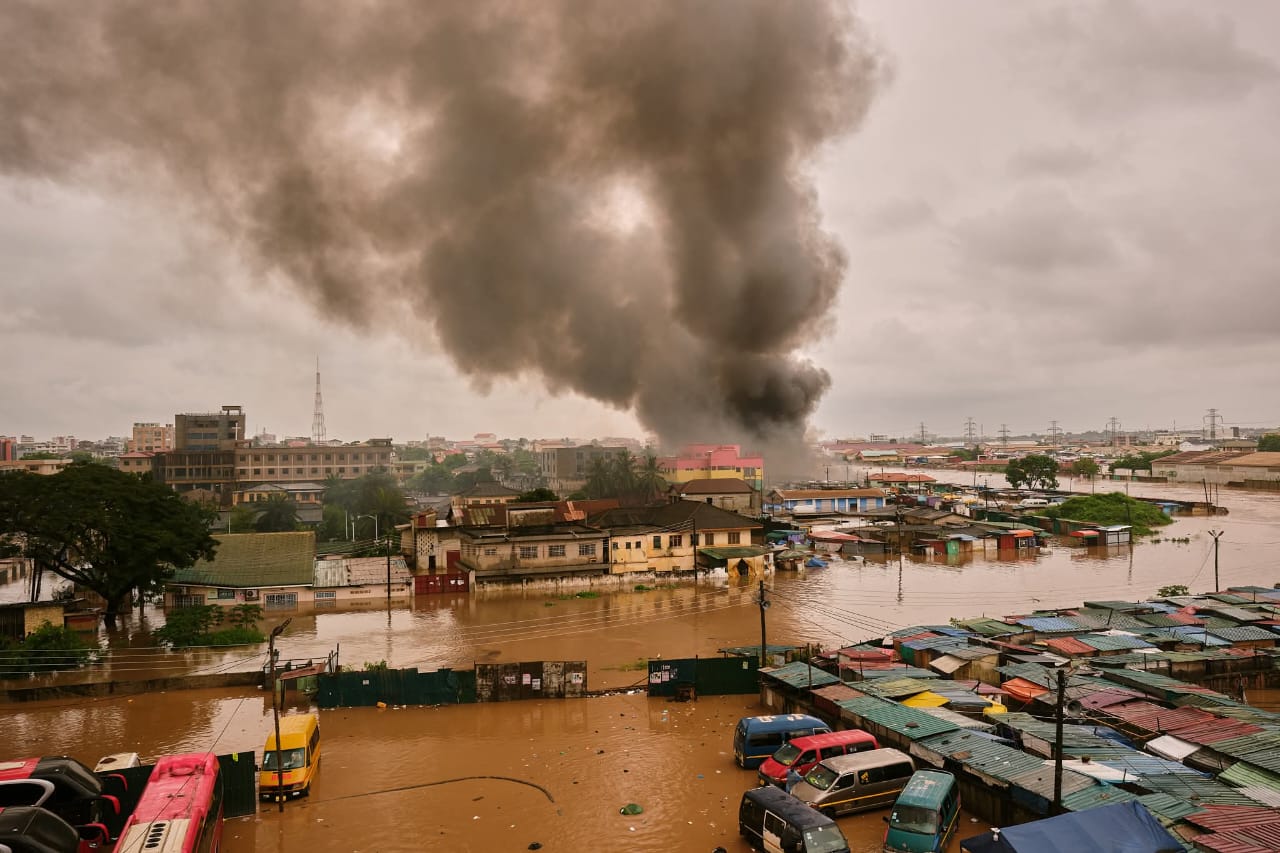
…The Time for Excuses Has Passed, Who Must Act and What Must Change?
By: Rev. Immanuel Wiafe
A Shared Responsibility
Government undoubtedly bears the primary responsibility for urban planning, drainage infrastructure and disaster management.
While government bears the primary responsibility for developing policies, enforcing regulations, and providing public infrastructure, the fight against flooding cannot be won by government alone. Every Ghanaian has a role to play in protecting the environment and safeguarding communities from preventable disasters. Lasting solutions will only emerge when citizens recognise that environmental responsibility begins with individual choices and collective action.
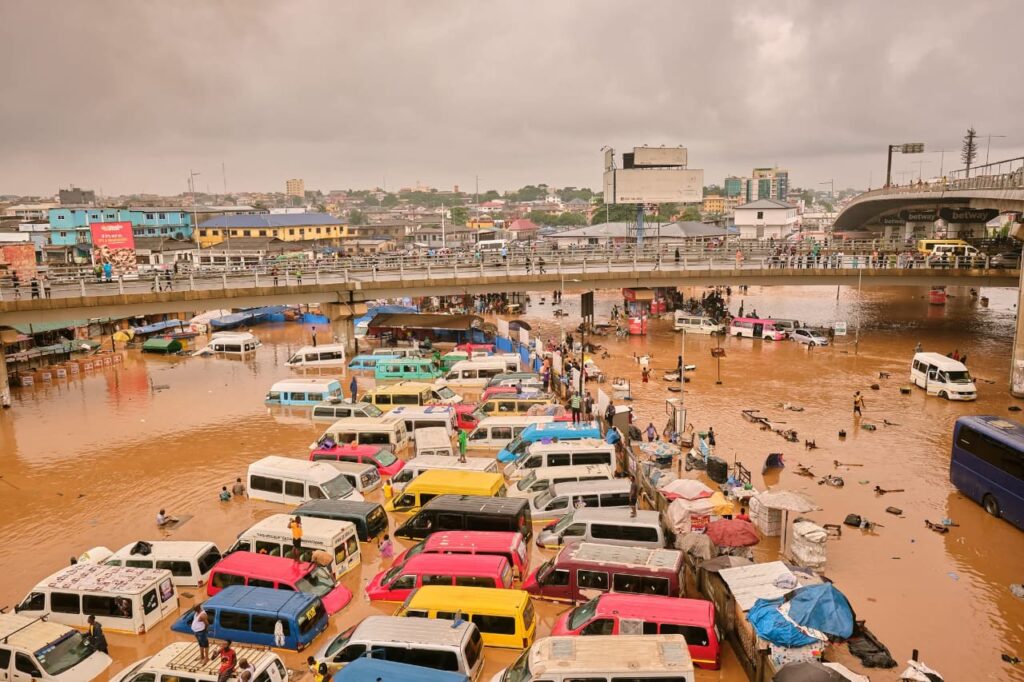
One of the greatest challenges remains the persistent problem of improper waste disposal. Despite repeated public education campaigns, large quantities of plastic waste, food containers, refuse, and other debris continue to find their way into drains, gutters, streams, and waterways. During heavy rainfall, these blocked drainage systems are unable to channel stormwater effectively, causing water to overflow into homes, businesses, and public roads. In many respects, the floods that follow are not only natural events but also the consequences of human behaviour.
Equally concerning is the continued construction of buildings on waterways, wetlands, and designated flood plains. In many communities, such developments proceed openly with the knowledge or even the support of neighbours and local residents. Rather than reporting illegal construction to the appropriate authorities, some communities remain silent until disaster strikes. By then, the damage has already been done, and entire neighbourhoods are left exposed to avoidable flooding.
Another obstacle is the widespread disregard for environmental regulations. Laws governing land use, sanitation, and environmental protection exist to safeguard lives and property, yet they are frequently ignored by individuals, businesses, and institutions alike. When regulations are treated as optional rather than mandatory, the consequences are eventually borne by the entire society. Environmental indiscipline may appear harmless in the short term, but its long-term effects are often devastating.
If Accra is to become a truly flood-resilient city, responsibility must be shared by every stakeholder. Sustainable progress cannot depend solely on emergency responses after disasters occur. Instead, it requires a culture of prevention in which government institutions, private organisations, community leaders, and ordinary citizens all work together toward the common goal of protecting lives and preserving the environment.
Government, for its part, must demonstrate unwavering commitment by enforcing existing planning, sanitation, and environmental laws without fear or favour. Regulations lose their value when they are applied selectively or suspended because of political pressure. Consistent enforcement will send a clear message that protecting lives and the environment is a national priority rather than an occasional campaign undertaken only after tragedy strikes.
Metropolitan, municipal, and district assemblies must also strengthen their commitment to sanitation and environmental management. Routine desilting of drains, timely collection of waste, regular inspections, and effective monitoring of flood-prone areas should become continuous responsibilities rather than seasonal activities. Preventive maintenance is always less costly than emergency recovery after disasters have occurred.
Developers, contractors, and property owners equally have an obligation to respect planning regulations and obtain the necessary approvals before commencing construction. Shortcuts that ignore environmental standards may yield immediate financial benefits, but they often impose enormous costs on communities and future generations. Responsible development should never come at the expense of public safety or environmental sustainability.
Ultimately, every citizen must embrace the responsibility of protecting rather than abusing the environment. Refusing to litter, reporting illegal developments, participating in community clean-up exercises, planting trees, and respecting public spaces may appear to be small individual actions, but together they can produce significant national change. Flood resilience is not built solely through concrete, machinery, and engineering; it is built through responsible leadership, disciplined communities, and citizens who understand that the future of Ghana depends on the choices they make today. Only when responsibility is shared will the nation move from reacting to floods to preventing them.
Learning from the Past
The tragedy of recurring floods is that Ghana has experienced similar disasters repeatedly.
From the catastrophic June 3, 2015 disaster to subsequent flooding events in 2016, 2018, 2025 and now 2026, investigations have consistently pointed to similar underlying causes poor drainage, blocked waterways, unplanned urban growth and weak enforcement of environmental laws.
Over the years, countless reports have been prepared by experts, engineers, environmental specialists, urban planners, and disaster management professionals, all examining the causes of Ghana’s recurring flooding crisis. These documents contain detailed analyses of the country’s drainage challenges, environmental degradation, weak planning systems, and institutional shortcomings. They have consistently identified the root causes of the problem and have provided practical, evidence-based solutions capable of reducing the nation’s vulnerability to floods.
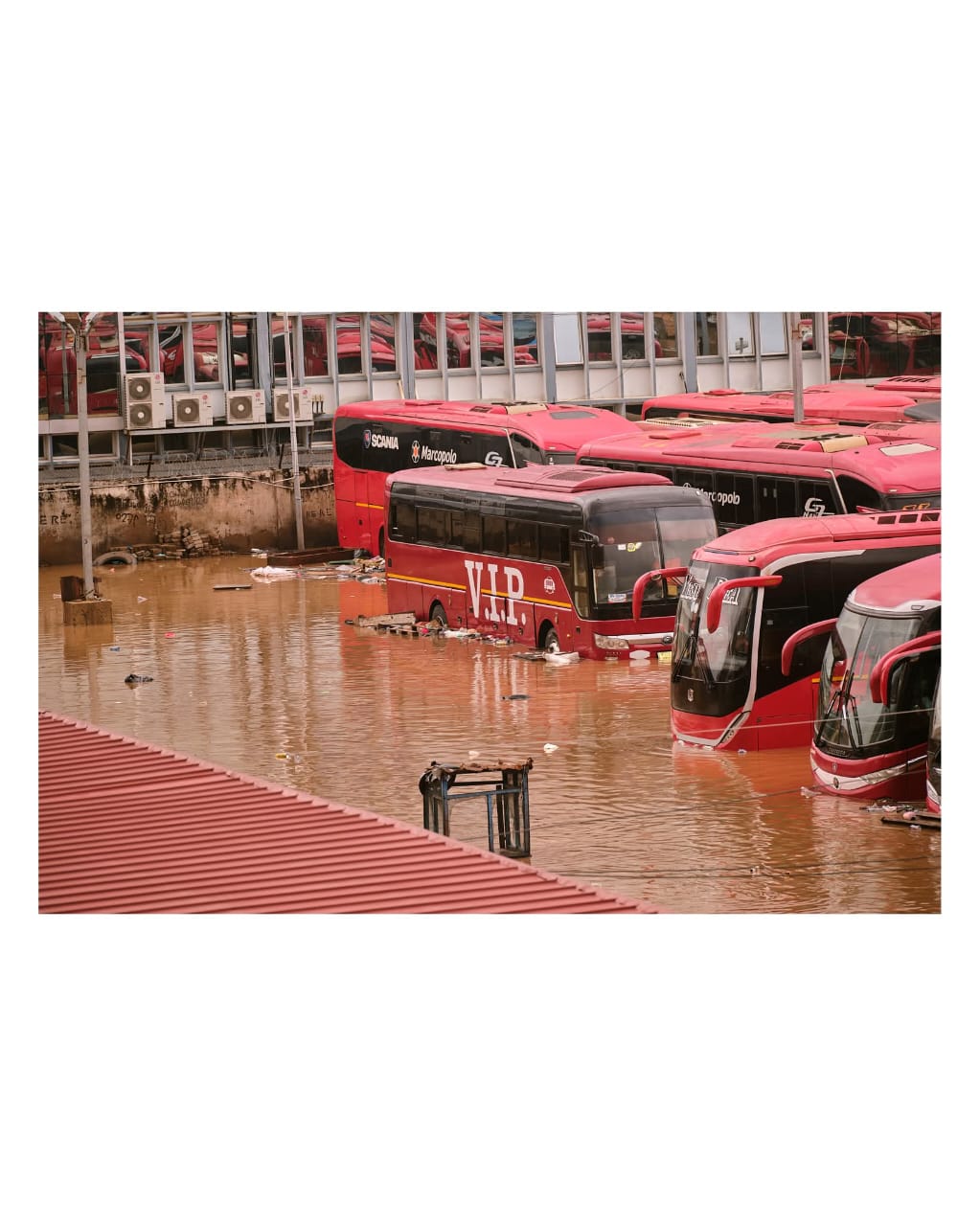
Beyond these reports, numerous recommendations have been made through national conferences, stakeholder consultations, parliamentary deliberations, academic research, and public policy discussions. Experts have repeatedly called for stricter enforcement of planning regulations, improved drainage infrastructure, better waste management systems, protection of wetlands, and stronger coordination among government institutions. The knowledge required to solve many of these challenges has never been in short supply.
Successive governments have also established committees, technical working groups, and investigative panels following major flood disasters. These bodies have conducted extensive assessments, consulted affected communities, and submitted comprehensive findings aimed at preventing future tragedies. Their reports have often reflected broad consensus among professionals and policymakers on the urgent actions required to protect lives, property, and the environment.
Yet despite this wealth of knowledge, research, and expert advice, implementation has too often failed to match the urgency of the recommendations. Many valuable reports end up gathering dust on office shelves, while approved policies are delayed, abandoned, or only partially executed. As a result, the same problems continue to resurface with each rainy season, and the nation repeatedly pays the price for failing to translate sound recommendations into sustained action. Ghana’s greatest challenge is no longer the absence of ideas it is the determination to implement them consistently, courageously, and without compromise.
Beyond Emergency Response
While emergency rescue operations remain essential during disasters, Ghana must move beyond reactive responses.
The focus should shift towards prevention.
This requires substantial investment in modern drainage infrastructure.
Flood-prone settlements should be mapped using updated technology.
Building regulations should be enforced without political interference.
Early warning systems should be expanded.
Communities must receive continuous public education on flood preparedness.
Environmental restoration including the protection of wetlands and natural waterways must become a national priority.
The Time for Excuses Has Passed
With every rainy season comes a familiar cycle of promises and public assurances. Following each major flood disaster, government officials, engineers, local authorities, and emergency response agencies visit affected communities to assess the damage. Flood sites are inspected, emergency meetings are convened, and high-level announcements are made, often accompanied by renewed commitments to address the underlying causes of the disaster. For a brief period, the nation unites in sympathy with victims and expresses determination that such tragedies must never happen again.
In the aftermath of these disasters, committees are established, investigations are launched, and technical experts are tasked with examining what went wrong and recommending lasting solutions. Reports are prepared, action plans are announced, and timelines are presented to reassure the public that decisive measures will follow. Yet, as the floodwaters recede and media attention shifts to other national issues, the sense of urgency gradually fades. Public interest declines, implementation slows, and many of the commitments made during the crisis quietly disappear from the national agenda until the next heavy rainfall once again exposes the same weaknesses.
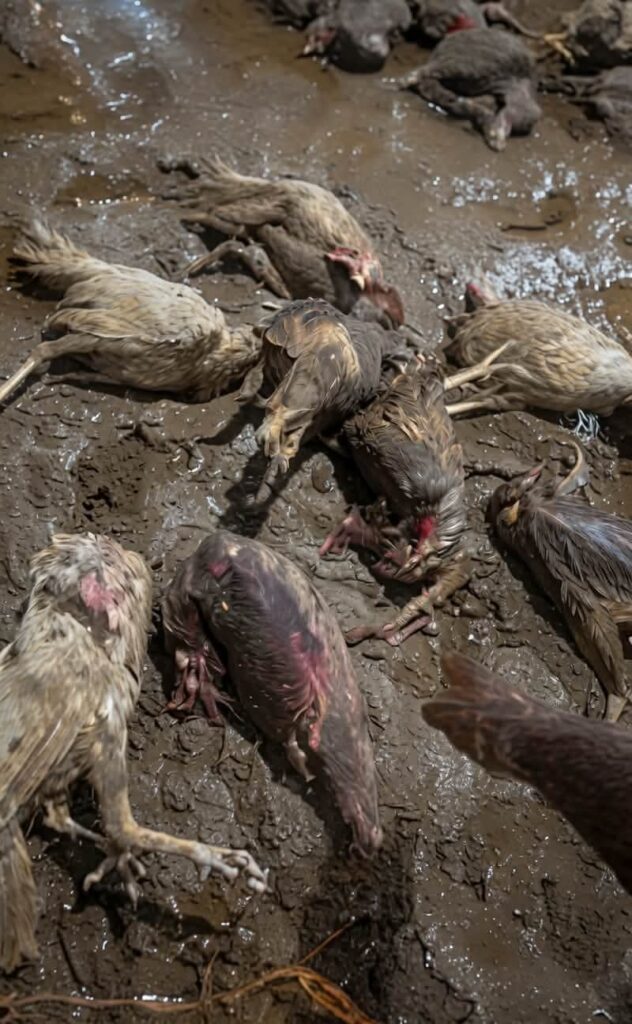
While this cycle continues, it is ordinary citizens who bear the greatest burden. Families lose loved ones, businesses collapse, livelihoods are destroyed, children see their education interrupted, and communities are forced to rebuild lives that should never have been shattered in the first place. The human, emotional, and economic costs continue to rise, leaving many Ghanaians wondering why preventable disasters have become recurring features of national life. The recent flooding should therefore not be remembered as just another tragic headline or another statistic in the country’s history of disasters. It must become the defining moment that compels both leaders and citizens to move beyond promises and embrace sustained action.
Accra deserves better than annual floods that disrupt lives and undermine national development. Ghanaians deserve communities where homes, schools, hospitals, businesses, and public infrastructure are protected through responsible planning, effective governance, and environmental stewardship. Above all, future generations deserve cities that are designed with resilience, sustainability, and safety at their core not communities condemned to relive the same preventable tragedies year after year. The decisions we make today will determine whether tomorrow’s headlines celebrate a nation that learned from its mistakes or continue to mourn lives that could have been saved. The future of Mother Ghana truly lies in our hands, and history will judge us not by the promises we made, but by the actions we took.
Conclusion
So, are we dealing with poor drainage, human activity, or something else?
The evidence suggests that Accra’s flooding crisis is the result of a dangerous combination of extreme rainfall, inadequate drainage infrastructure, uncontrolled urban development, environmental degradation, weak law enforcement and the growing impact of climate change.
Rain may be inevitable. Disaster is not.
Until Ghana addresses the structural causes behind these recurring floods with sustained political commitment and collective civic responsibility, every rainy season will continue to threaten lives, destroy property and undermine national development.
The water eventually recedes.
The suffering, however, remains long after the skies have cleared.
“Rain may be inevitable. Disaster is not.
Until Ghana addresses the structural causes behind these recurring floods with sustained political commitment and collective civic responsibility, every rainy season will continue to threaten lives, destroy property and undermine national development.
The water eventually recedes.
The suffering, however, remains long after the skies have cleared.”

