

ARE WE DEALING WITH POOR DRAINAGE, HUMAN ACTIVITY, OR SOMETHING ELSE IN ACCRA’S FLOODING CRISIS? (Part 2)

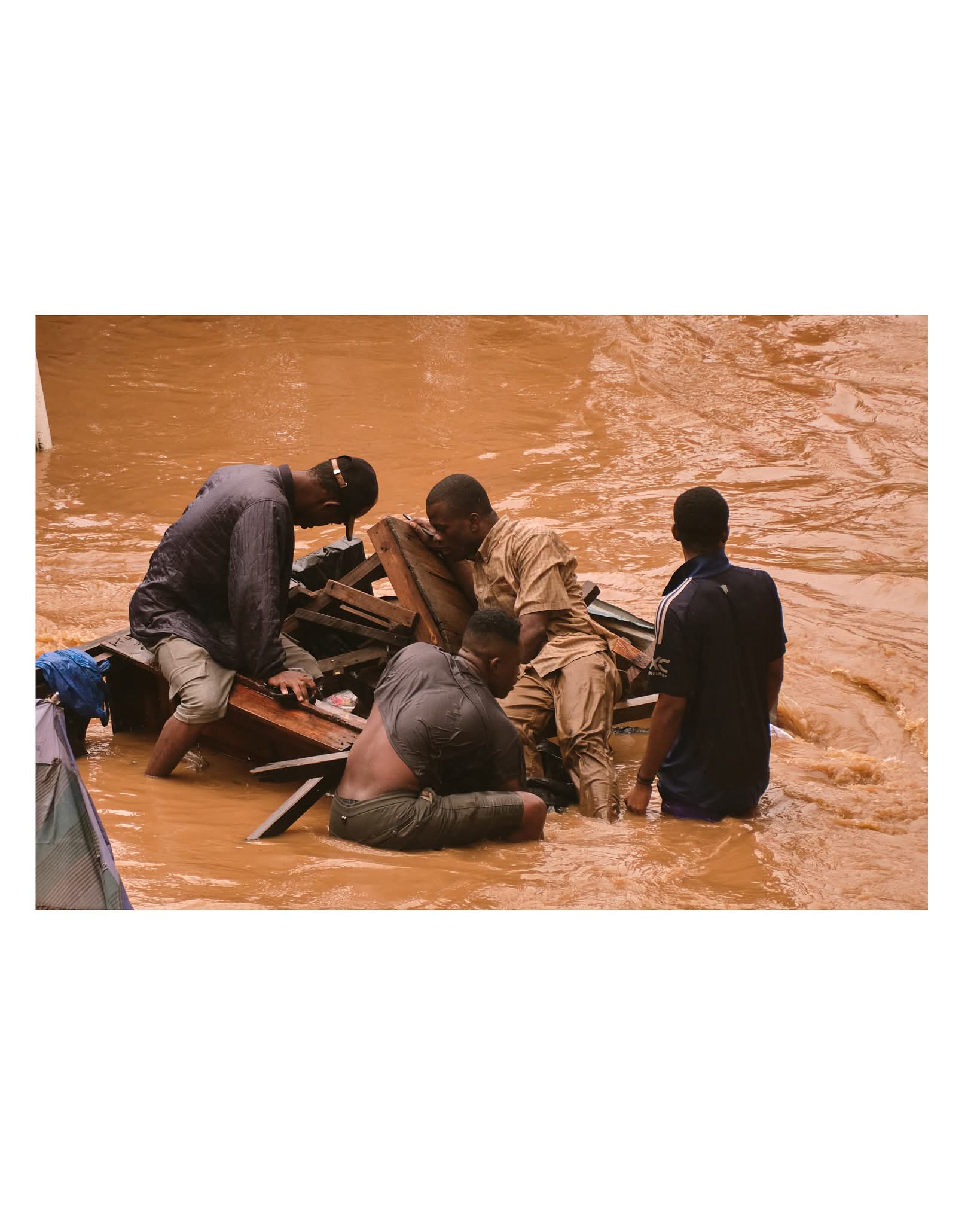
…Poor Drainage, Human Activities and Weak Enforcement: The Real Causes
By: Rev. Immanuel Wiafe
Human Activities Continue to Worsen the Situation
One cannot discuss flooding in Accra without confronting the role of human behaviour.
One of the greatest contributors to Ghana’s recurring flooding crisis is the growing culture of environmental neglect. Across many towns and cities, especially in rapidly expanding urban centres, plastic waste continues to clog drains, gutters, culverts, and waterways that were originally designed to channel rainwater safely away from homes and businesses. Instead of flowing freely into rivers and the sea, stormwater is trapped by heaps of discarded sachet water wrappers, plastic bottles, food containers, and other waste materials. What should have been an efficient drainage system has become a ticking time bomb, with devastating consequences whenever heavy rains fall.
Equally alarming is the widespread disregard for planning and environmental regulations. Illegal structures have been erected directly on watercourses, wetlands, and designated flood plains, often with little or no regard for the long-term risks involved. Natural streams that once served as vital channels for stormwater have been narrowed, diverted, or completely blocked by residential estates, commercial buildings, and other developments. In many instances, waterways that nature created over centuries have been sacrificed for short-term economic gain, leaving floodwaters with nowhere to go except into people’s homes, schools, markets, and workplaces.
The problem is further compounded by the rapid disappearance of open spaces that once acted as natural buffers during heavy rainfall. Fields, wetlands, and undeveloped lands that absorbed excess rainwater have gradually been replaced by concrete buildings, paved compounds, asphalt roads, and other hard surfaces that prevent water from soaking into the ground. As a result, rainwater now rushes across these impermeable surfaces with greater speed and volume, overwhelming already blocked drainage systems and increasing the frequency and severity of floods. This is not merely an environmental issue; it is a clear warning that poor urban planning, weak enforcement of development regulations, and our collective disregard for nature are steadily creating disasters that could otherwise have been prevented.
As urbanisation continues without corresponding investment in drainage infrastructure, every heavy rainfall places increasing pressure on an already overwhelmed system. Experts have long identified choked gutters, poor urban planning, encroachment on waterways and inadequate enforcement of planning regulations as major contributors to recurrent flooding.
Poor Drainage Infrastructure
Perhaps no issue has generated more public discussion, criticism, and frustration than the state of Accra’s drainage system. Every rainy season, the conversation returns with renewed urgency as flooded streets, stranded motorists, displaced families, and damaged properties dominate news headlines. Citizens repeatedly ask the same question: Why does the nation’s capital continue to flood despite decades of development, countless studies, and repeated government interventions? The answer, unfortunately, lies not in the rain alone but in the persistent weaknesses of the city’s drainage infrastructure and the failure to maintain and expand it in line with the city’s rapid growth.
Across many communities in Accra, drains remain heavily silted throughout the year, significantly reducing their capacity to carry stormwater. Sand, plastic waste, household refuse, and construction debris accumulate for months, sometimes years, with little or no maintenance. Instead of functioning as channels that safely direct rainwater away from residential and commercial areas, many drains have become stagnant dumping grounds. Consequently, even moderate rainfall is enough to cause water to overflow onto roads, homes, schools, markets, and business premises, disrupting livelihoods and placing countless lives at risk.
Another major concern is the poor design and incomplete nature of many drainage projects. In several parts of the city, drains simply end abruptly without connecting to larger stormwater channels or nearby rivers. These disconnected drainage systems collect water but have nowhere to discharge it efficiently. As a result, water backs up quickly during heavy rainfall, creating flash floods in surrounding neighbourhoods. Such incomplete infrastructure not only undermines public confidence but also raises serious questions about planning, supervision, and the long-term sustainability of public investment.
Even where drainage systems exist, many are no longer fit for purpose. Numerous drains were constructed decades ago to serve communities that were much smaller and less densely populated than they are today. Since then, urbanisation has accelerated dramatically, with increasing numbers of houses, roads, shopping centres, and commercial facilities replacing natural landscapes. Yet the drainage infrastructure has not been upgraded to accommodate the significantly larger volume of stormwater generated by this rapid expansion. Drains that were once adequate have become too narrow and too shallow to cope with present-day realities.
The situation is made worse in several newly developed communities where roads have been constructed with little or no provision for adequate drainage. In some areas, beautifully paved roads become rivers within minutes of a heavy downpour because engineers either failed to incorporate effective drainage systems or existing drains were left unfinished. Residents who once celebrated improved road networks are now confronted with flooded compounds, damaged vehicles, eroded roads, and growing concerns about public safety. Infrastructure that should enhance development instead becomes another source of hardship during every rainy season.
Ultimately, Accra’s drainage crisis is not merely an engineering challenge; it is a test of national planning, governance, accountability, and political commitment. A modern capital city cannot continue to experience preventable flooding year after year while billions of cedis are invested in infrastructure development. The time has come for comprehensive drainage planning, routine maintenance, strict enforcement against indiscriminate dumping, and infrastructure designed not only for today’s population but for the needs of future generations. Until these systemic shortcomings are addressed with urgency and consistency, the rains will continue to expose the weaknesses beneath our roads, our communities, and, regrettably, our planning priorities.
Where drains exist, maintenance is often irregular, allowing refuse, vegetation and sediment to accumulate until water can no longer flow freely.
Consequently, rainfall that should have drained within minutes instead inundates entire neighbourhoods.
Weak Enforcement of Planning Laws
For decades, successive governments have publicly acknowledged the recurring flooding problem and pledged to bring it under control. Every administration has announced ambitious anti-flood programmes, promising comprehensive drainage improvements, stricter enforcement of planning regulations, and long-term solutions to protect lives and property. These commitments have often been accompanied by assurances that lessons have been learned from previous disasters and that history would not be allowed to repeat itself.
In pursuit of these promises, several large-scale drainage projects have been initiated across Accra and other flood-prone communities. New drains have been constructed, existing channels have been expanded, and flood control infrastructure has been commissioned at considerable public expense. In many cases, these projects have offered temporary relief and demonstrated that government intervention can make a meaningful difference when properly implemented.
Authorities have also undertaken demolition exercises to remove structures that were illegally erected on waterways, wetlands, and designated flood plains. These operations are intended to restore the natural flow of stormwater and reduce the risk of flooding in densely populated communities. While such actions have occasionally been bold and decisive, they have often generated controversy because of their social and economic consequences for affected families and businesses.
Beyond infrastructure and demolitions, governments, environmental agencies, local assemblies, and civil society organisations have invested significant effort in public education. Numerous campaigns have encouraged citizens to dispose of waste responsibly, refrain from dumping refuse into drains, and protect the environment through cleaner sanitation practices. Radio discussions, television programmes, community outreach activities, school campaigns, and social media initiatives have all sought to change public attitudes toward environmental stewardship.
Despite these commendable efforts, the results have fallen far short of public expectations. Floods continue to occur with alarming regularity, causing avoidable deaths, destroying homes and businesses, and imposing enormous financial burdens on both citizens and the state. This persistent recurrence suggests that the challenge is no longer a lack of awareness or policy ideas but the inability to sustain implementation and ensure accountability.
One of the greatest obstacles remains inconsistent enforcement of existing laws and regulations. Ghana has numerous legal provisions governing land use, environmental protection, and physical planning. However, these laws are too often applied selectively or only after public outrage follows a disaster. Enforcement that should be routine becomes reactive, allowing illegal activities to flourish until the consequences become impossible to ignore.
Political interference has further complicated efforts to address the problem. In many instances, planned enforcement actions against illegal structures are delayed, suspended, or abandoned altogether because of political pressure, electoral considerations, or the influence of powerful individuals. Decisions that should be guided solely by law and public safety are sometimes overshadowed by short-term political interests, weakening public confidence in state institutions.
Equally troubling is the continued approval of developments in environmentally sensitive areas. Building permits have, on occasion, been granted for projects located close to waterways, wetlands, and natural drainage corridors. Even where permits are not officially issued, unauthorised developments frequently proceed with little resistance. Such practices undermine urban planning principles and increase the exposure of communities to preventable disasters.
The result is a familiar and deeply frustrating cycle. Illegal encroachment continues largely unchecked, warnings from engineers and environmental experts are ignored, and preventive action is postponed until heavy rains expose the consequences. Only after lives have been lost, homes destroyed, businesses ruined, and infrastructure damaged do emergency meetings convene and promises of decisive action re-emerge. Unfortunately, once the crisis subsides, enforcement often loses momentum, setting the stage for the next disaster.
This cycle has repeated itself for far too many years, and the cost has become unacceptable. Breaking it will require far more than speeches, policy announcements, or emergency interventions after every flood. It demands unwavering political will, impartial enforcement of planning and environmental laws, institutional accountability, and a national commitment to place public safety above political convenience and private interests. Until these principles become the foundation of governance, Accra and indeed many other parts of Ghana will remain dangerously vulnerable to floods that are increasingly preventable but repeatedly allowed to occur.
Climate Change Cannot Be Ignored
While human failures are evident, climate change is increasingly intensifying the challenge.
Warmer atmospheric temperatures enable storms to carry greater quantities of moisture, resulting in heavier rainfall over shorter periods.
Cities with inadequate drainage systems become especially vulnerable under such conditions.
Therefore, future flood management cannot rely solely on cleaning gutters. It must also include climate adaptation.
Stormwater systems must be redesigned to accommodate future rainfall patterns rather than historical averages.
Urban planning must recognise that extreme weather events are becoming the new normal.
The Cost Beyond Statistics
When flood disasters occur, the first reports that reach the public are usually dominated by statistics. News headlines announce the number of people who have died, those who have been injured, the communities affected, and the estimated financial losses. While these figures are important for understanding the scale of the disaster, they often fail to tell the complete story. Numbers may inform the public, but they rarely capture the depth of human suffering that follows every flood.
The media frequently reports that several people have lost their lives. Within hours, those deaths become another addition to the long list of flood casualties recorded over the years. Yet every person counted in those figures had a name, a family, dreams, responsibilities, and a place within a community. They were not merely statistics; they were fathers, mothers, children, spouses, workers, students, neighbours, and friends whose absence leaves painful voids that no official report can adequately describe.
The same is true for those who survive with injuries. Medical reports may indicate that ten, twenty, or even fifty people were injured, but behind every injury is a painful journey of physical recovery, emotional distress, financial burden, and uncertainty. Some victims may require long-term medical care, while others may never fully recover from the physical and emotional scars left by the disaster.
Official figures also speak of hundreds of displaced persons, yet displacement is far more than the loss of a physical shelter. It means families sleeping in classrooms, churches, community centres, or temporary camps. It means children living without privacy, parents struggling to provide basic necessities, and elderly people enduring conditions that rob them of comfort and dignity. Displacement disrupts education, employment, healthcare, and the normal rhythm of family life.
Financial losses are often expressed in millions of cedis, but these monetary estimates cannot fully account for what people actually lose. A collapsed house may represent decades of savings, countless sacrifices, and a lifetime of hard work. For many families, a home is not simply a building; it is the place where memories are created, children are raised, and dreams for the future are nurtured. When floodwaters reduce such homes to rubble, they destroy far more than bricks and mortar.
Behind every missing person is a story of fear, uncertainty, and unanswered questions. Families wait anxiously at hospitals, emergency shelters, and rescue centres, desperately hoping for good news. Every passing hour deepens the emotional agony as relatives search flooded communities, make frantic telephone calls, and pray that their loved ones will be found alive. For many, the pain of not knowing becomes as devastating as the disaster itself.
One of the least discussed consequences of flooding is its profound psychological impact. While damaged roads and destroyed buildings receive immediate attention, the emotional wounds suffered by survivors often remain invisible. Trauma, anxiety, depression, grief, and emotional exhaustion frequently persist long after the floodwaters have disappeared. Unfortunately, mental health support rarely receives the attention or investment it deserves during disaster recovery.
Children are among the most vulnerable victims of these experiences. After surviving a devastating flood, many develop an intense fear whenever dark clouds gather or heavy rain begins to fall. The sound of thunder, once an ordinary part of nature, becomes a painful reminder of loss and danger. Some struggle to sleep during rainy nights, while others experience recurring nightmares, anxiety, or difficulty concentrating in school.
Parents carry a different but equally heavy burden. Every rainy season becomes a period of heightened anxiety as they worry not only about protecting the lives of their children but also about safeguarding their homes, businesses, and livelihoods. Many remain awake throughout stormy nights, constantly monitoring rising water levels and preparing for the possibility of another emergency evacuation. Living under such constant stress takes a significant toll on both physical and emotional well-being.
Entire communities also bear the weight of repeated disasters. Neighbours come together to clear debris, repair damaged homes, restore schools, reopen businesses, and rebuild shattered lives. Their resilience is admirable, yet it is heartbreaking that many must repeat the same painful recovery process year after year because the underlying causes of flooding remain unresolved.
The recurring nature of these disasters gradually erodes public confidence and hope. Families begin to question whether rebuilding is worthwhile when another rainy season may once again destroy everything they have worked so hard to restore. This cycle of destruction and reconstruction creates emotional fatigue and reinforces the perception that suffering has become an unavoidable part of life rather than a preventable national challenge.
Perhaps the greatest tragedy is that these invisible costs rarely appear in official assessments. Government reports can estimate the value of damaged roads, bridges, electricity networks, and public infrastructure, but there is no simple formula for measuring grief, fear, trauma, shattered dreams, or the emotional pain of watching one’s life disappear beneath floodwaters. These human costs are every bit as real as the physical destruction, yet they often remain overlooked in national conversations.
As Ghana continues to search for lasting solutions to its flooding crisis, the nation must remember that disaster management is ultimately about protecting people, not merely repairing infrastructure. Every policy, every drainage project, every planning decision, and every enforcement action should be guided by the recognition that behind every flood statistic is a human life deserving of dignity, security, and hope. Until we begin to value these invisible costs as much as the visible ones, our response to flooding will remain incomplete, and countless families will continue to bear burdens that no statistic can ever fully express.
Conclution
Understanding the causes is only the beginning. The more difficult question is whether Ghana has the courage to implement the solutions that have already been identified. In the final part of this series, we examine what must change if Accra is to escape this recurring national tragedy.

