


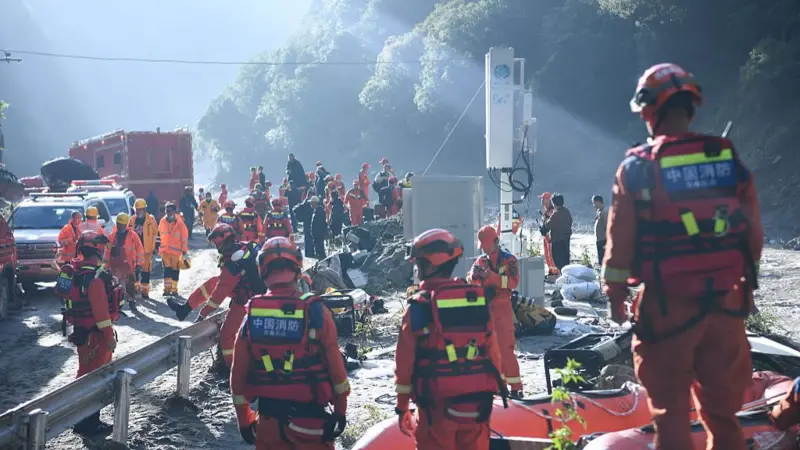
At least 752 people have died, and more than 2,500 remain missing after catastrophic Nepal-Tibet flash floods struck the Himalayan border region on Wednesday.
The disaster, triggered by a glacial collapse near the Langtang Lirung peak, sent a devastating surge of water, ice, and debris through narrow mountain valleys, wiping out villages, hydropower projects, and vital road networks.
The Human Toll
The death toll from the Nepal-Tibet flash floods continues to rise. Nepal’s authorities report 2,498 missing, including 589 foreign nationals and 933 hydropower workers. In Tibet, Chinese state media confirms 16 deaths and 546 missing. The floodwaters carried bodies over vast distances, leaving many remains mutilated and difficult to identify. Hospital mortuaries have reached capacity as recovery teams work tirelessly.

Rescue Efforts Under Extreme Conditions
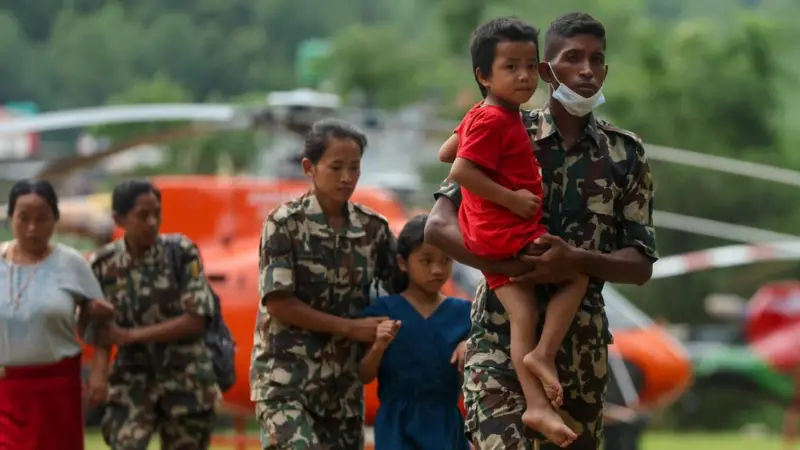
Nearly 20,000 security forces are deployed in rescue operations along the Nepal-Tibet border. Helicopters serve as the primary lifeline, evacuating stranded workers and foreign nationals to safety. However, the Nepal-Tibet flash floods destroyed over 35 bridges and 40 kilometres of road, making ground access nearly impossible. The United Nations reports that rough terrain and persistent rain make aid delivery “extremely difficult.”
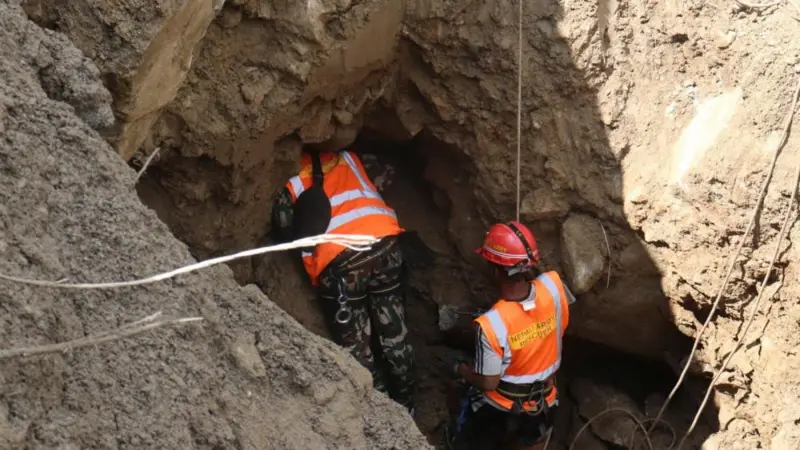
Rescuers have saved more than 8,100 people so far, including 279 hydropower workers and 227 foreign nationals. One remarkable rescue involved a six-year-old girl pulled from debris after surviving nearly 60 hours trapped beneath mud and slush.
A Secondary Threat Emerges
A new barrier lake has formed following a landslide detected on Saturday, and Chinese authorities warn of a “high risk” that it could breach its banks. The lake currently holds approximately 2 million cubic metres of water, with inflows expected to reach 3 million cubic metres amid continued rainfall. Chinese engineering crews are assessing the site, but the remote location and unstable terrain complicate any intervention.
Disaster risk experts caution that a second flood, even if smaller in scale than the first, could bring serious consequences. The mountain remains unstable, and additional ice or debris could trigger another destructive surge downstream. Search operations have already been suspended at times as crews retreat from the danger zone.
International Response and Future Concerns
The international community has mobilised significant resources. The United States has pledged more than $3.6 million in humanitarian aid, including emergency food for affected households. India has sent a tunnel rescue reconnaissance team to support operations. However, Nepal has declined offers of foreign rescue teams, citing logistical challenges experienced during the 2015 earthquake.
As the Nepal-Tibet flash floods response continues, the threat of a second flood looms large. The rapidly warming Himalayas are creating conditions that make such glacial disasters more frequent and severe. For the families of more than 3,000 people still missing, the wait for news continues. The full scale of this tragedy may not be known for weeks, as rescue teams battle treacherous conditions to reach survivors and recover the dead.

