

A System That Refuses To Let You Leave : The Korle-Bu Teaching Hospital Experience


The experience of seeking healthcare at Korle-Bu Teaching Hospital continues to expose a deeply troubling gap between medical care and administrative efficiency.
This is one that leaves patients and their families unnecessarily burdened, even at the point of discharge.
Overwhelming Discharge Process
It is particularly disheartening to observe the dilly-dallying approach that characterizes the discharge process. What should be a straightforward administrative transition often becomes an exhausting ordeal.
In my own case, my wife was duly discharged on 25th March, 2026 around 1:00 p.m. Ordinarily, this should have marked the end of her hospital stay. However, due to internal delays, she was not allowed to leave. The explanation given was that the doctor’s discharge report reached the nurses “late” and by “late,” they meant around 2:00 p.m. According to them, the accounts office had closed, making it impossible to complete the necessary financial clearance. Consequently, she was compelled to spend an additional night at the hospital, incurring extra costs that we must now bear.
Inefficiency and Systematic Failure In Coordination
This kind of experience reflects not just inefficiency, but a systemic failure in coordination. The leisurely attitude displayed by some doctors, and more frequently the nursing staff, often exacerbates these delays. There appears to be little urgency or appreciation for the cumulative stress that patients and their relatives endure. After navigating the already overwhelming pressures of illness, treatment, and financial strain within a struggling health system, one is still subjected to avoidable frustration at the final stage of care.
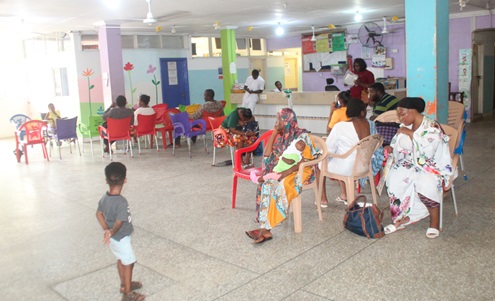
The frustration is often trivialized with the now all-too-familiar cliche: “Fa ma Nyame” meaning “leave it to God”. In my case, on the next day, after enduring the ordeal from as early as 10:00 a.m. and only being allowed to leave around 4:00 p.m., a sympathetic nurse, having witnessed the entire episode, remarked that I should be thankful that my wife had finally been discharged and allowed to go home. Indeed, one ought to feel relief after such an experience. But this raises a more troubling question:
how do we intend to fix a system so deeply flawed when the response is reduced to resignation and spiritual consolation?
At what point do we confront the emotional and mental toll inflicted on patients and their families, rather than masking systemic failure with pious acceptance?
Dysfunction System Migration Causing Failures
Compounding the problem is the glaring dysfunction arising from system migration failures. At one point, we are told that delays are due to the introduction of a new digital system. Yet at another point, we are told the system has completely frozen and operations must revert to manual processes.
This inconsistency only deepens the chaos. Patients and their relatives are then subjected to the burden of filling lengthy forms. This also comes with moving from office to office, and even physically navigating multiple floors. Bear in mind one also has to be ascending and descending staircases to access services such as the pharmacy because lifts function only sporadically.
A System Designed To Frustrate
In effect, the entire experience becomes an endurance test. The way things are currently done at Korle-Bu is, quite frankly, a recipe for disaster. It is a system that appears designed to frustrate from beginning to end. A system that wears you down at every stage, and even when you think you have reached the finish line, still manages to impose one final hurdle. It feels less like a structured healthcare institution and more like a jungle, where one is left to navigate and survive by sheer resilience, a grim case of survival of the fittest.
I am not here to apportion blame for the mere satisfaction of doing so. I raise these alarm bells because I genuinely want to see a system that works, one that restores dignity, efficiency, and trust in healthcare delivery.
We fully acknowledge that as a country we are significantly challenged in the health sector, and that many of our health professionals are putting their lives on the line daily, working assiduously sometimes at great personal cost to save others. This broader systemic failure is indeed deeper than what may appear on the surface.
System Change
However, even within these constraints, there remains a duty both individually and collectively. If each actor in the system commits to doing their part with diligence and professionalism, we may at least mitigate some of these needless pressures.
When a nurse suggests that both of you can raise your voices at each other as though it were a casual banter, even when legitimate concerns are being raised, it does not help to fix the system. Also, when one walks into an office and finds health professionals busily engaged in conversation while work is delayed or left undone, it reinforces the perception of indifference. When patients or their relatives are met with dismissive or hostile attitudes simply for asking questions, it further deepens the frustration and mistrust.
These may seem like small, isolated acts, but collectively they contribute significantly to the rot we experience. They are precisely the kinds of everyday lapses that, if corrected, could begin to shift the culture within the system.
I also understand that many health facilities across the world are challenged in one way or another. Korle-Bu Teaching Hospital is one of West Africa’s leading hospitals. Yet it still struggles with basic issues like slow, poorly coordinated discharges. For an institution of its stature, such disorganization, and the persistent “discharge wahala” is unacceptable.
Way Forward
Everyone who is found wanting particularly those who, despite the broader systemic challenges, simply neglect their duties must bow their heads in reflection. It is time to rise above these correctable shortcomings rather than lazily or subtly shifting all blame to the broader narrative of national or global systemic failure. Some of these issues are well within our control and demand immediate attention.
As a starting point, my foremost recommendation, based on this experience, is the urgent and thorough review of discharge procedures. There must be immediate reforms to streamline the process. This will bring some measure of relief to patients and their families after all they have already endured.
Kwame-Kwakye
26.03.26

