


US, China, and Western Powers Unite in Unprecedented Push to Halt Ghana’s Gold Royalty Hike
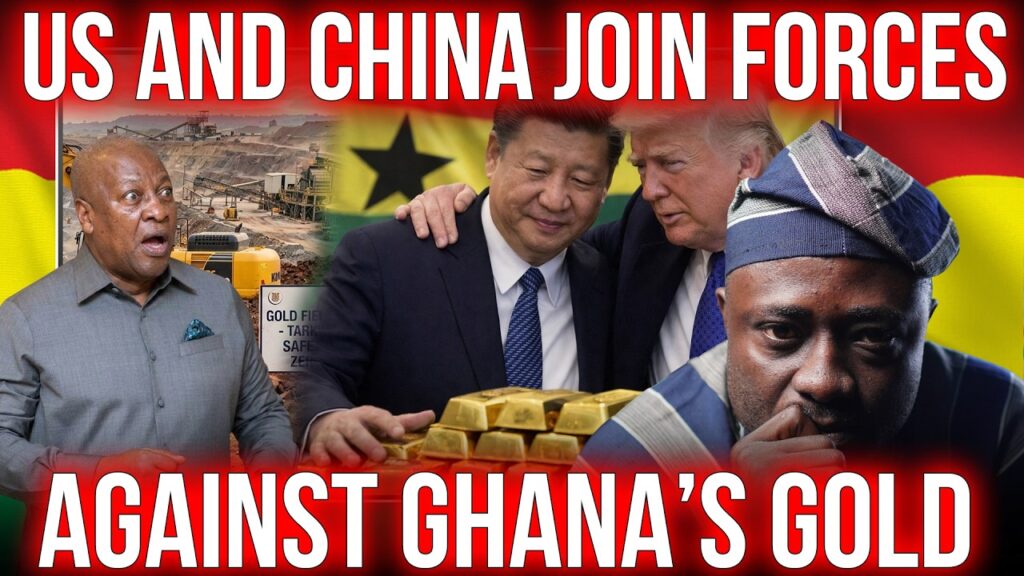
In a rare show of unity, the United States, China, and several Western governments have launched an unusually coordinated diplomatic offensive to persuade Ghana to abandon a proposed gold royalty hike, warning the move could harm some of the world’s largest mining operators.
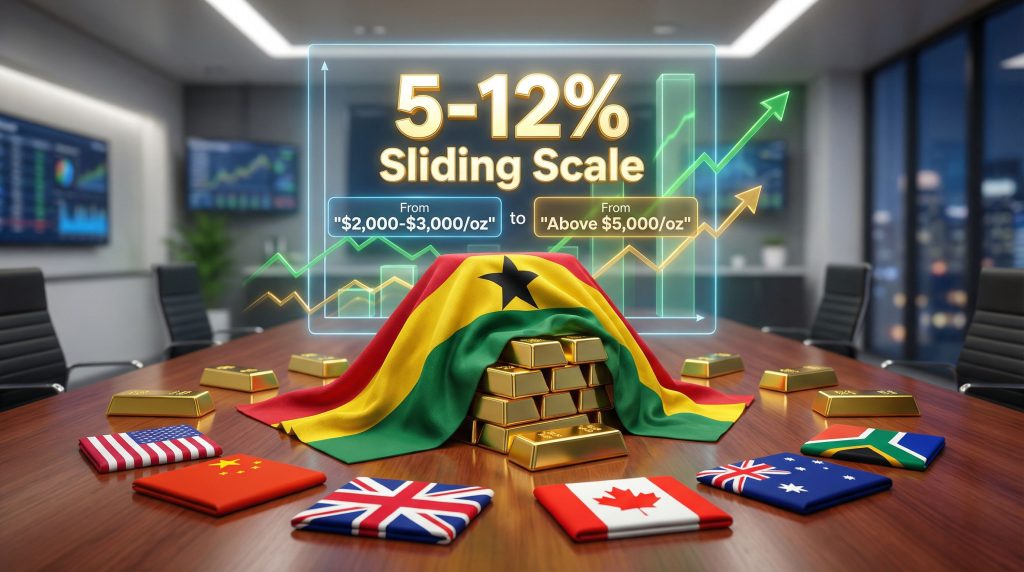
Africa’s largest gold producer plans to replace its current fixed 5% royalty with a sliding scale ranging from 5% to 12%, tied directly to international bullion prices.
The West African nation aims to capture greater revenue from gold’s historic rally, with prices consistently trading above $5,000 per ounce.
However, miners warn the upper bands of the new regime, which could take effect as early as this week unless authorities amend or withdraw it.
This would make Ghana one of the continent’s most expensive mining jurisdictions and severely squeeze profit margins.
While Ghana has agreed to reduce an existing levy to facilitate the reform’s passage, mining companies maintain the proposed scale remains too aggressive and have submitted counter-proposals with lower rates.
Unprecedented Diplomatic Intervention
Beyond pressure from Washington and Beijing, diplomatic missions from the United Kingdom, Canada, Australia, and South Africa have also joined the fray.
Three senior industry executives describe this as an unprecedented high-level response to a fiscal proposal.
“This is the first time I’ve seen the diplomatic community get involved at this scale,” a senior industry source reported.
Representatives from these missions recently met with Ghana’s Lands and Natural Resources Minister, presenting a joint document detailing their concerns.
Two people with direct knowledge of the meeting disclosed this. The group now seeks further talks with the Finance Minister.
“The heads of missions expressed concern that the operating environment of the mines will be challenging,” one executive said, speaking on condition of anonymity due to the sensitivity of the matter.
The UK, Canadian, and Australian High Commissions, along with the U.S., South African, and Chinese embassies in Accra, did not immediately respond to requests for comment.
Mining CEOs Rally Against Proposal
Global mining CEOs have also mounted private opposition. Leaders from Newmont, Gold Fields, AngloGold Ashanti, and Perseus Minerals delivered written concerns or met directly with the Lands Minister between December and January. Chinese-owned operations, including Zijin Mining, Chifeng Gold, and Shandong Gold have filed formal protests.
A letter from the Association of China–Ghana Mining, copied to Beijing’s ambassador warned the proposal could threaten the viability of Zijin’s Akyem mine, Chifeng’s Wassa operation, and Shandong’s Cardinal gold project.
“The royalty issue has united companies like nothing in recent years,” the senior industry source observed.
None of the mining companies responded to requests for comment. Ghana’s Lands and Finance Ministries also remained silent when approached.
Strong Profits Complicate Negotiations
The pushback comes despite robust 2025 financial results from Ghana-linked producers:
-
Newmont earned over $7 billion
-
Gold Fields more than doubled its profit
-
AngloGold Ashanti tripled earnings
-
Perseus Mining posted $421.7 million, a 16% year-on-year increase
These figures show the growing tension between countries rich in natural resources, which want a bigger share of profits from their commodities, and mining companies trying to protect their earnings in uncertain global markets.
Regulator Defends Reform
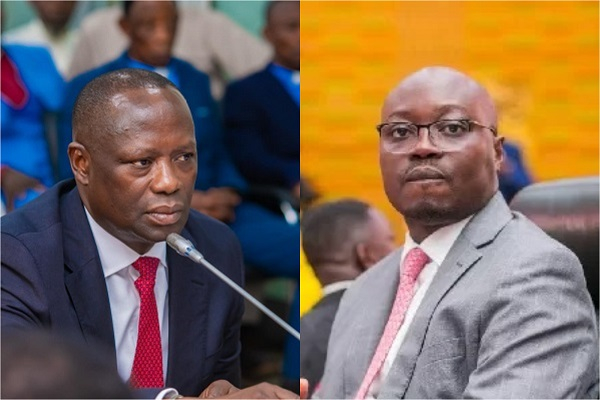
Despite mounting opposition, Ghana’s Minerals Commission CEO Isaac Tandoh defended the proposed sliding scale, stating diplomatic missions raised concerns about the 12% top rate but did not oppose the reform in principle. Missions suggested applying the 12% rate only after gold hits $5,000 per ounce, but Ghanaian authorities rejected that proposal.

Tandoh dismissed fears that Ghana is becoming uncompetitive, arguing investors prioritize regulatory stability over marginal cost shifts. He maintained that modeling shows the sliding scale strikes the right balance, boosting state revenue while preserving industry margins.
The Ghana Chamber of Mines has warned the new regime would “dry up new projects and output,” with CEO Kenneth Ashigbey expressing concern about long-term investment implications.
A Test Case for Resource Nationalism
Ghana’s proposed reform reflects a broader trend across Africa, where governments from Mali to Burkina Faso are revising fiscal frameworks to capture more value from their mineral wealth amid sustained high prices.
How Accra navigates this unprecedented diplomatic and corporate pressure will likely set a precedent for resource-rich nations across the continent.
The sliding-scale system would also apply to lithium, shifting to 5–12% tied to prices between $1,500 and $3,200 per metric ton, while other minerals retain a flat 5% rate.
As the Tuesday implementation deadline looms, all eyes are on Accra to see whether diplomatic unity translates into policy change, or whether Ghana holds firm in its pursuit of greater resource wealth.

