

President Mahama Orders Fuel Tax Cuts After Emergency Cabinet Meeting
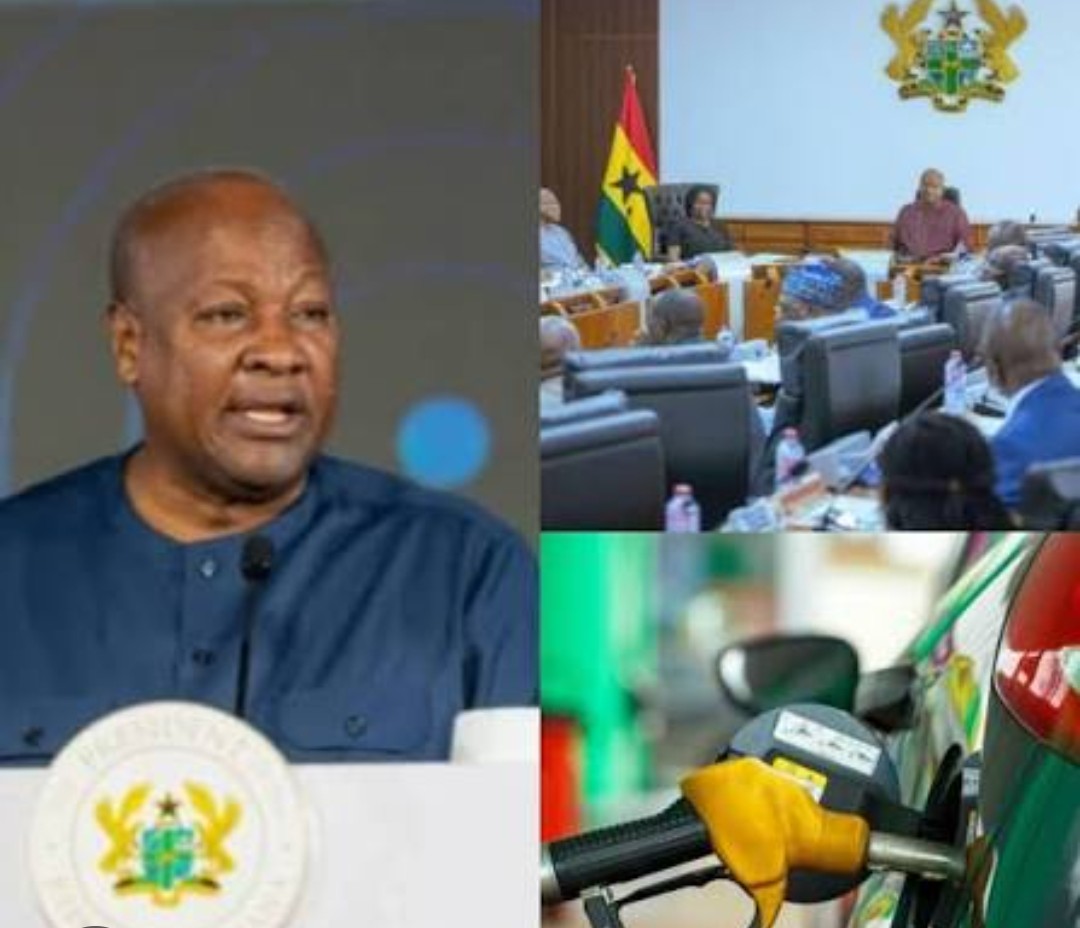
President John Dramani Mahama has directed key ministers to take urgent measures to cushion Ghanaians from the impact of rising fuel prices, following global supply disruptions linked to tensions involving Iran, Israel, and the United States.
The announcement came after an emergency cabinet meeting on the morning of April 9, 2026. Consequently, the President ordered an immediate reduction in fuel taxes to ease the financial burden on households and businesses.
Global Tensions Trigger Local Price Surges
For starters, the recent escalation of geopolitical conflicts in the Middle East has disrupted oil supply chains worldwide. Specifically, tensions among Iran, Israel, and the United States have pushed crude oil prices to a six-month high. As a result, Ghana, like many other nations, faced sudden pump price hikes over the past week.
However, President Mahama refused to wait for external solutions. Instead, he convened his economic and energy ministers for an urgent session at Jubilee House. During that meeting, he reviewed the latest market data and decided on immediate fiscal intervention.
How the Fuel Tax Cut Will Work
The President’s directive targets specific levies on petrol, diesel, and kerosene. For example, the energy debt recovery levy and the price stabilization margin will see temporary reductions.
Moreover, the government will suspend the sanitation levy on fuel for the next three months. Therefore, consumers should expect a drop of approximately 7% to 10% at the pumps within 48 hours.
Furthermore, the Finance Minister, Dr. Cassiel Ato Forson, will work with the National Petroleum Authority (NPA) to implement these changes. Meanwhile, the Bulk Oil Storage and Transportation (BOST) company will release additional reserves to prevent any artificial shortages.
Additional Measures to Protect Consumers
Beyond tax cuts, President Mahama has ordered three other protective actions:
First, the National Security Ministry will increase surveillance on fuel depots to stop hoarding.
Second, the Transport Ministry will regulate taxi and trotro fares to prevent unjustified fare hikes.
Third, the Bank of Ghana will provide forex support to bulk importers, ensuring they can purchase fuel without panic.
Transitioning to the long term, the President also instructed the Energy Ministry to accelerate the country’s shift to natural gas and renewable sources. This strategy, he explained, will reduce Ghana’s vulnerability to foreign oil shocks.
Public and Market Reactions
Initial reactions from the Trades Union Congress (TUC) and the Ghana Union of Traders Association (GUTA) have been largely positive. For instance, GUTA’s spokesperson called the move “a necessary lifeline for small businesses.”
On the other hand, some economists warn that sustained tax cuts might reduce government revenue for road projects. Nevertheless, the President assured citizens that his administration would offset the loss by cutting non-essential spending.
Similarly, drivers at major filling stations in Accra expressed relief. “We were struggling to break even,” one commercial driver said. “Now, with the tax cut, we can keep our fares stable.”
What Happens Next?
The Ministry of Finance will publish the revised fuel price build-up by April 11, 2026. In addition, the NPA will monitor compliance across all oil marketing companies. If global prices continue to rise, President Mahama has promised to consider further relief, including direct cash transfers to transport operators.

