


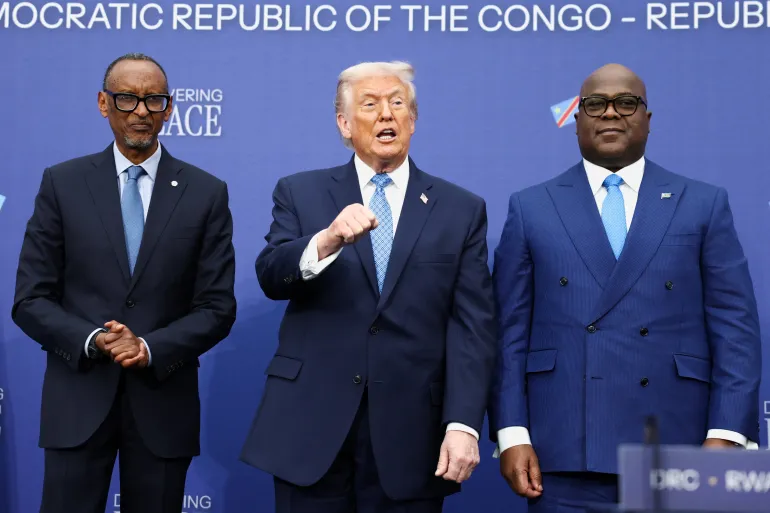
United States President Donald Trump has officially hosted the leaders of Rwanda and the Democratic Republic of the Congo (DRC) to finalize a significant U.S.-brokered peace deal.
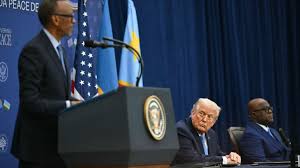
This landmark agreement aims to end a prolonged and devastating conflict between the two nations.
The Washington Ceremony and Optimistic Visions
During a ceremonial signing at the U.S. Institute for Peace in Washington, D.C., President Trump heralded the accord as a transformative moment.
“It is an amazing day: a great day for Africa, a great day for the world and for these two countries,” Trump stated.
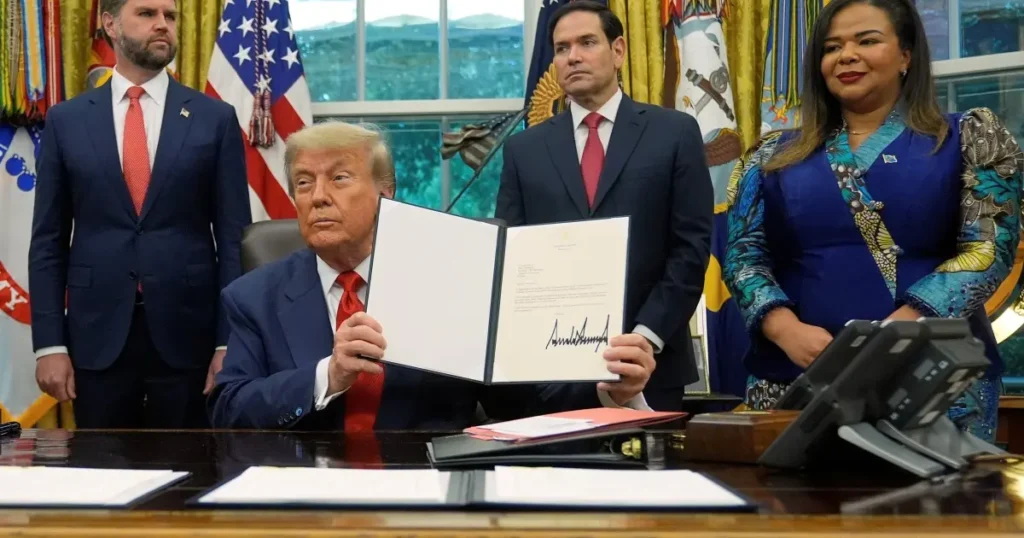
He expressed strong optimism about the future, noting,
“We’ll see how it all works out, but I think it’s going to work out really great.”
This U.S.-brokered peace deal was originally negotiated in June, following initial talks between DRC President Felix Tshisekedi and Rwandan President Paul Kagame in Qatar last March.
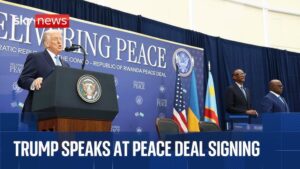
Consequently, Thursday’s event served to formalize those earlier accords.
Economic Incentives and Rare Earth Minerals
In addition to the peace agreement, President Trump announced complementary bilateral economic deals. Specifically, the United States will partner with both nations to purchase rare earth minerals, which are critical for emerging technologies, energy production, and medical devices.
“We’ll be involved with sending some of our biggest and greatest companies over to the two countries,”
Trump added.
“And we’re going to take out some of the rare earth, take out some of the assets and pay. Everybody is going to make a lot of money.”
This economic component strategically supports the broader U.S.-brokered peace deal by fostering mutual prosperity.
Addressing the Roots of a Complex Conflict
The conflict primarily involves the Rwanda-backed March 23 Movement (M23), which has advanced into the resource-rich eastern DRC. Historically, Rwanda’s main grievance centers on DRC harboring ethnic Hutu militias linked to the 1994 genocide.
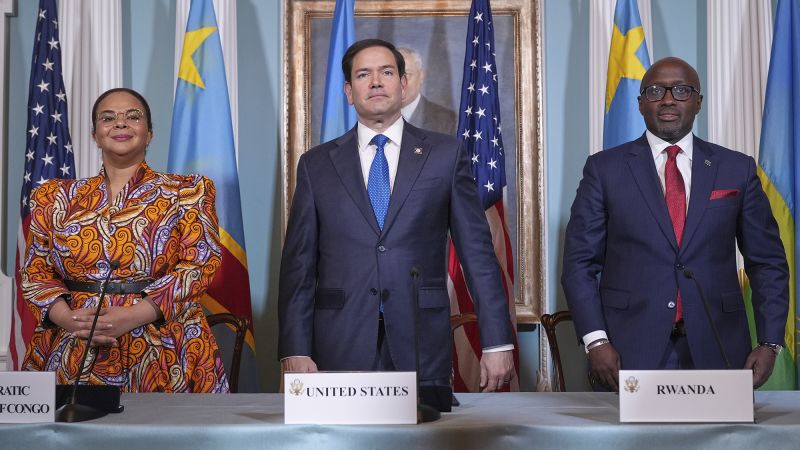
Therefore, the U.S.-brokered peace deal contains crucial stipulations: Rwanda will end its support for M23, and the DRC will help neutralize the Hutu militias. Both countries must also respect each other’s territorial integrity.
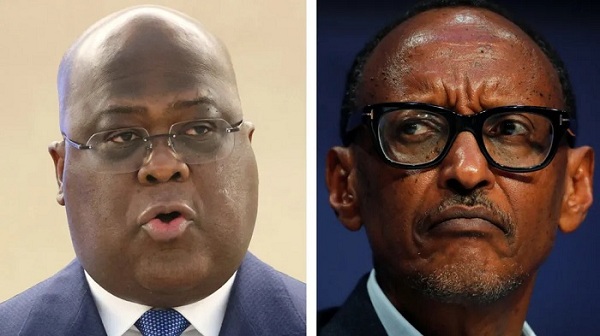
President Tshisekedi called the terms a “turning point,” saying they
“begin a new era of friendship, cooperation and prosperity.”
Meanwhile, President Kagame acknowledged the challenges ahead but assured Rwanda’s commitment:
“There will be ups and downs on the road ahead… Rwanda will not be found wanting.”
Cautious Hope Amid Ongoing Violence
Despite the diplomatic progress, violence persists on the ground. The DRC signed a separate deal with M23 in July, yet fighting continues in the east.
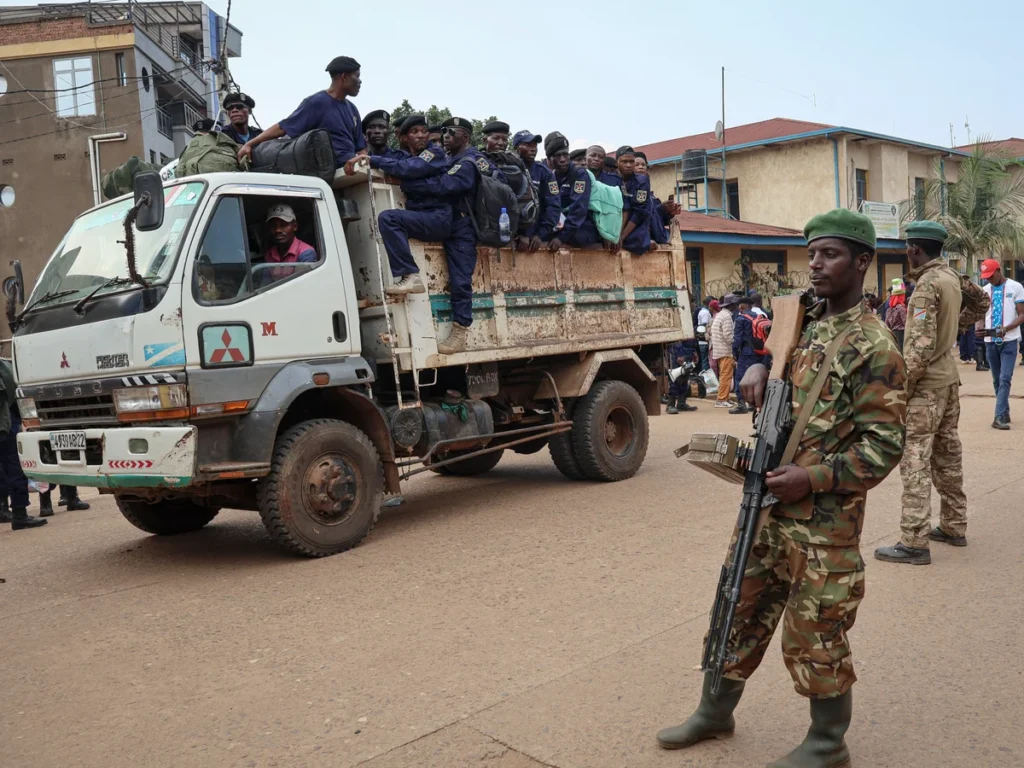
A resident of Goma, a city captured by M23 this year, told the Associated Press,
“We are still at war. There can be no peace as long as the front lines remain active.”
Analysts emphasize that this U.S.-brokered peace deal is just the beginning.
According to Al Jazeera’s reporter in Washington, the conflict is “more ingrained” than many assume, putting pressure on all parties to transform the agreement into a lasting peace.
A Contrast in Rhetoric and the Path Forward
The celebratory ceremony contrasted sharply with President Trump’s recent derogatory comments about another African nation, Somalia.
This juxtaposition highlights the unpredictable nature of the diplomacy.
Ultimately, the success of this U.S.-brokered peace deal rests on sustained commitment from the DRC, Rwanda, and international partners to address deep-seated issues and ensure the agreement delivers tangible security and economic benefits to the region.

