


U.S.-Nigeria Joint Airstrike Targets ISIS in Northwest Nigeria
U.S. and Nigerian forces executed a joint airstrike against ISIS targets in northwest Nigeria on Christmas Day.
Consequently, this event has ignited a complex discussion about security strategy, international cooperation, and the realities on the ground in a region grappling with multifaceted violence.
The Evening of the Airstrike: Confusion and Claims
The operation began late on December 25th when residents of the village of Jabo in Sokoto state reported a startling event.
They observed an object resembling a small aircraft overhead, which was followed by a loud explosion and a huge fireball.
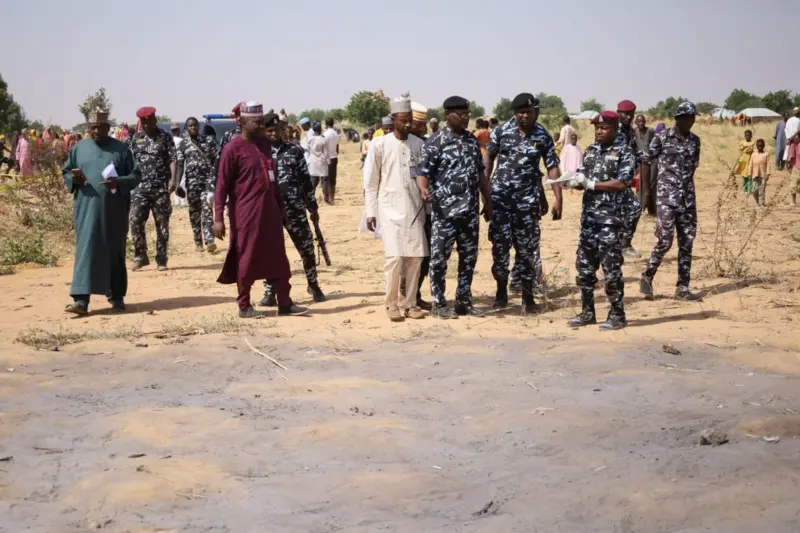
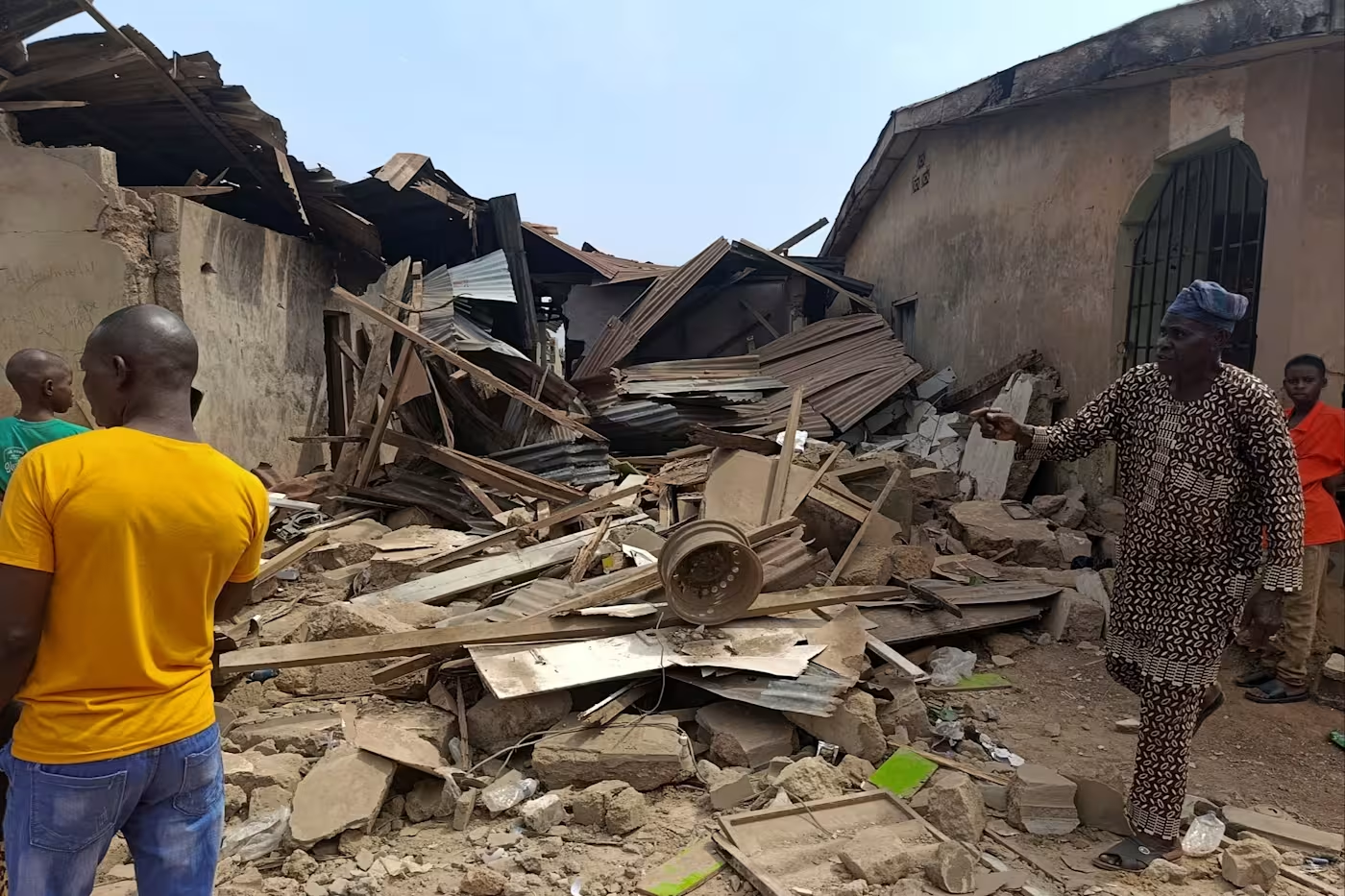
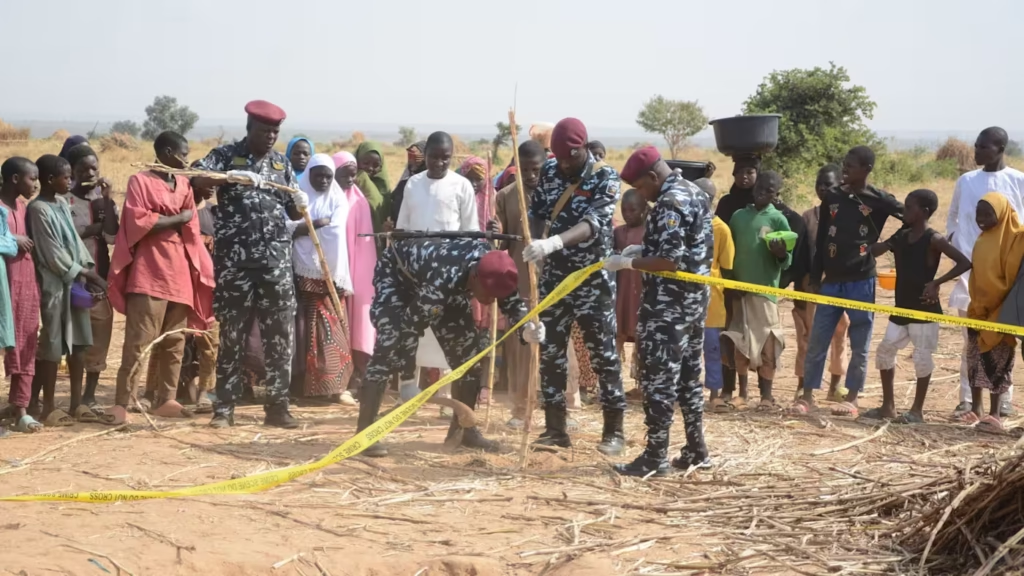
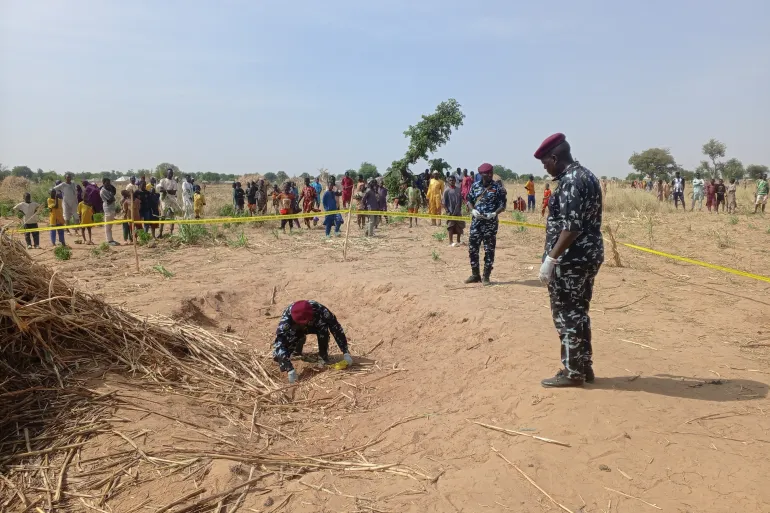
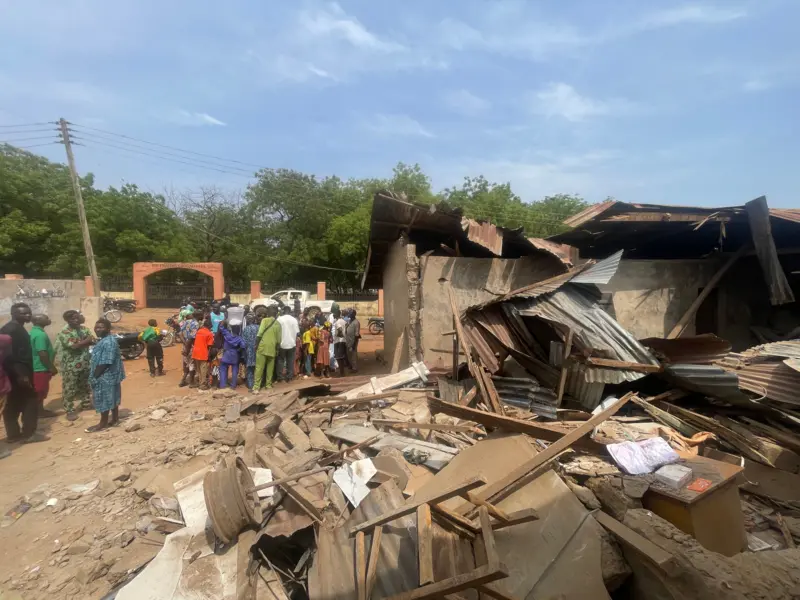
However, local accounts immediately conflicted with official reports. Villagers professed surprise, stating the projectiles hit empty fields and caused no casualties, with video footage later showing debris in farmland.
Meanwhile, U.S. President Donald Trump declared a “powerful and deadly strike” that “decimated” ISIS camps, a claim initially supported by the U.S. military’s assessment of “multiple” militants killed.

Official Accounts Detail a Coordinated, Precision Operation
Subsequently, Nigerian defense officials provided a detailed account. Major General Samaila Uba confirmed that Nigeria’s armed forces, “in conjunction with” the U.S., conducted the strike based on “credible intelligence and careful operational planning.”
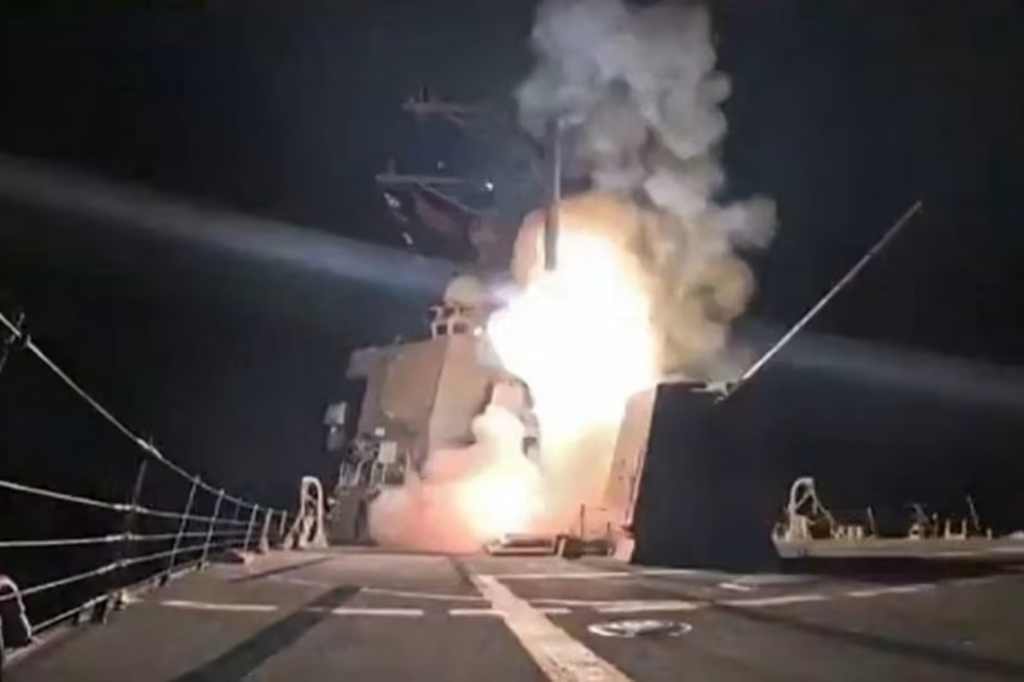
Furthermore, the Nigerian government stated that 16 GPS-guided precision munitions, fired from platforms in the Gulf of Guinea, targeted “terrorist enclaves” in the Bauni forest.
They asserted the action, taken with presidential approval, neutralized foreign ISIS elements seeking to infiltrate from the Sahel, although they acknowledged debris fell on civilian areas without causing casualties.
Analysts Question the Choice of Target
Despite these official statements, several Nigerian analysts and observers have raised pointed questions. Security analyst Mustapha Gembu called the focus on Sokoto “highly questionable,” noting it is a predominantly Muslim area more affected by banditry than the ISIS-linked terrorism targeting Christians cited by Trump.
Similarly, opposition politician Umar Ardo expressed skepticism about Nigeria’s operational control, arguing the targeting of an area with “no prior established ISIS presence” demands a full public explanation from President Bola Tinubu.
A Broader Context of Crisis and External Pressure
This U.S.-Nigeria joint airstrike occurs within a tense national and international context. Indeed, Nigeria endures overlapping security crises, including banditry, kidnappings, and Islamist extremism, which claimed nearly 9,500 lives last year.
Moreover, the operation came a day after a deadly mosque bombing in the northeast and followed sustained pressure from the Trump administration on Nigeria to protect Christian communities from violence.
Ultimately, while framed by authorities as a decisive blow against transnational terrorism, the strike underscores the intricate challenges of external military intervention in Nigeria’s complex and localized conflicts.

