
New WhatsApp Web Malware Attack Targets Windows Users: How to Stay Safe
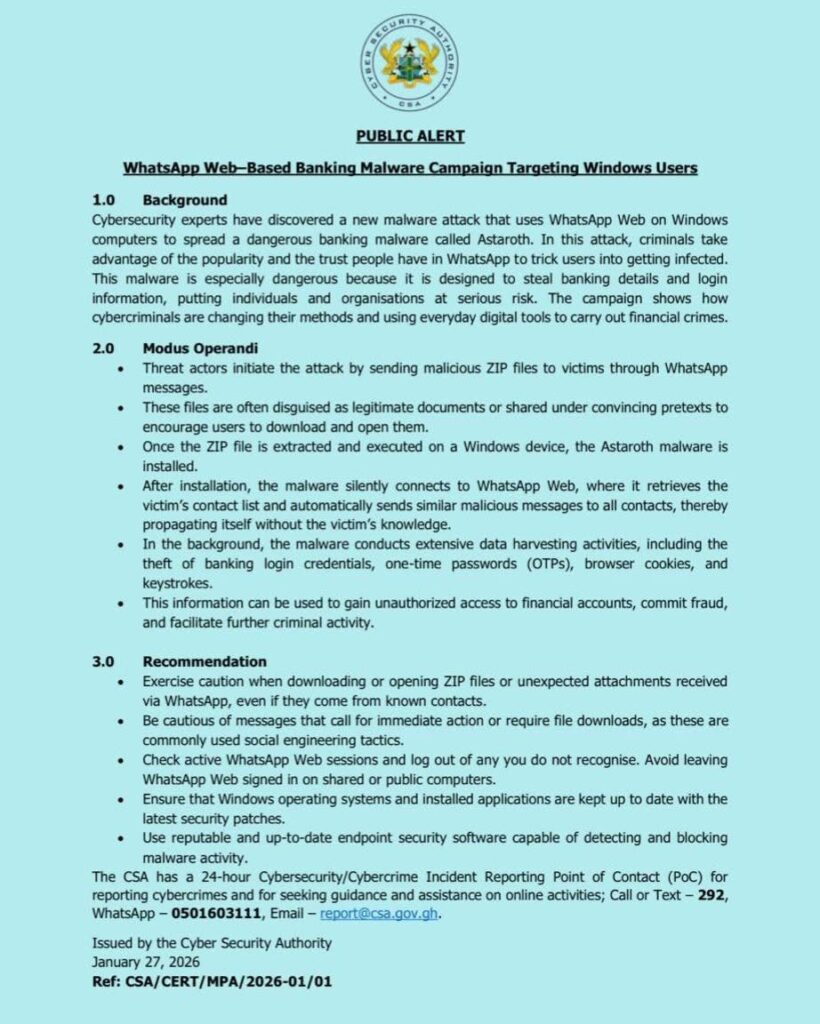
Cybersecurity experts are actively warning Windows users about a sophisticated new malware campaign. This alarming attack cleverly exploits the trusted WhatsApp platform to spread a dangerous banking trojan known as Astaroth.
How the Attack Works
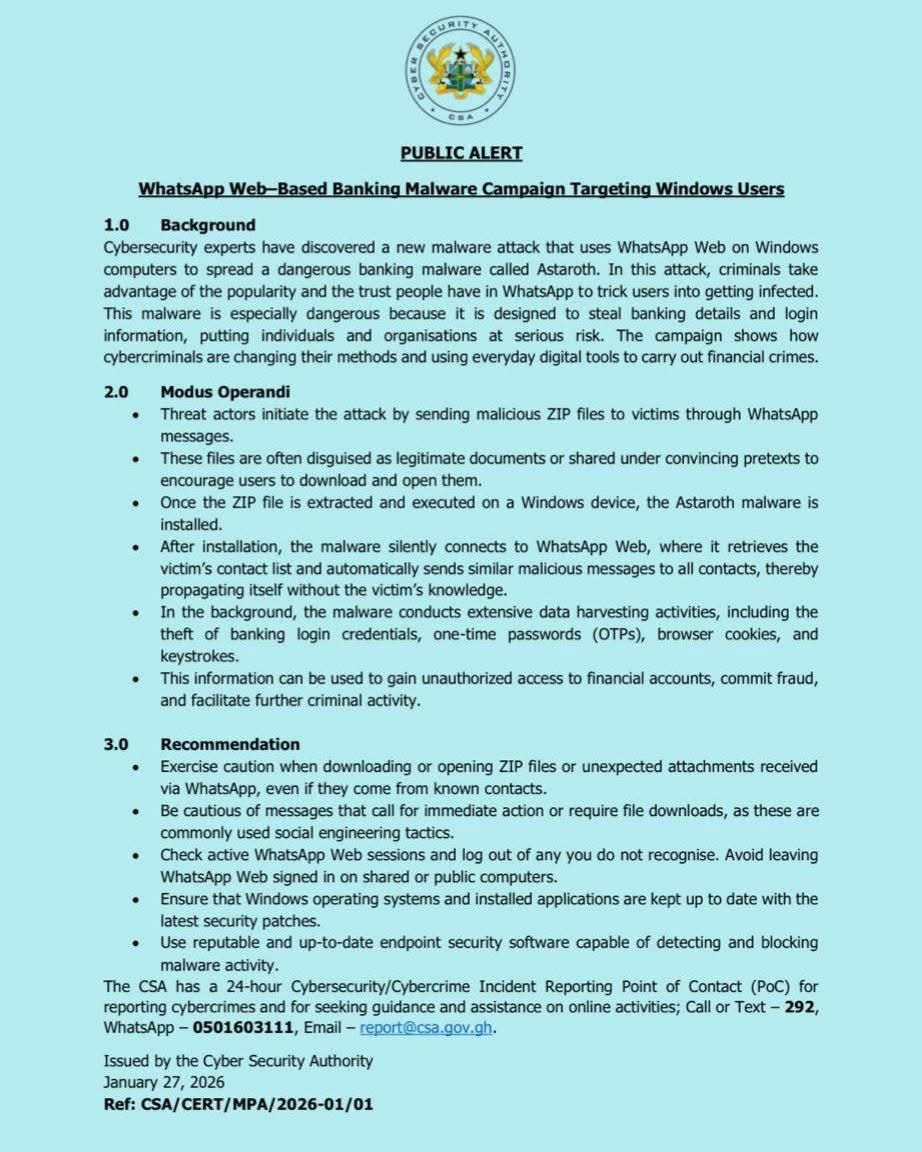
Threat actors initiate this scheme by sending malicious ZIP files directly to victims through WhatsApp messages. Typically, these files disguise themselves as legitimate documents or use convincing social engineering pretexts to trick users into opening them.
Once a victim downloads and extracts the file on a Windows computer, the Astaroth malware silently installs itself. Immediately afterward, the malware connects to the victim’s WhatsApp Web session. From there, it automatically harvests the entire contact list and proceeds to send the same malicious files to every person on it, thereby spreading the infection virally without the user’s knowledge.
Concurrently, in the background, the malware begins extensive data harvesting. It specifically targets sensitive financial information, including banking login credentials, one-time passwords (OTPs), saved browser cookies, and keystrokes. Consequently, criminals can use this stolen data to gain unauthorized access to bank accounts, commit fraud, and fund further criminal activities.
Essential Steps for Protection
Therefore, it is critical for all users to adopt proactive security measures. First, always exercise extreme caution with any unexpected file received via WhatsApp, even from known contacts. Be particularly wary of messages that urge immediate action or require a download, as these are classic social engineering red flags.
Furthermore, regularly monitor and manage your WhatsApp Web sessions. You should immediately log out of any active sessions you do not recognize and avoid staying signed in on shared or public computers. Additionally, ensure your Windows operating system and all applications are consistently updated with the latest security patches, as these updates often fix critical vulnerabilities that malware exploits.
Finally, maintain a robust first line of defense by using reputable, up-to-date antivirus or endpoint security software. A quality security suite can detect and block malware activity before it causes harm.
Reporting an Incident
If you suspect you have encountered this or any other cyber threat, you should report it immediately. The Cyber Security Authority operates a 24-hour Cybersecurity Incident Reporting Point of Contact. You can reach them by call or text at 292, on WhatsApp at 0501603111, or via email at report@csa.gov.hk.
Staying informed and vigilant is your best protection against evolving digital threats. By following these recommendations, you can significantly reduce your risk and help disrupt the chain of infection.