


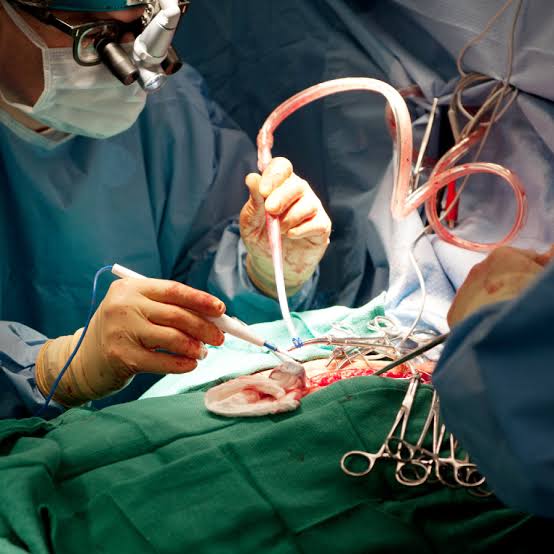
Jehovah’s Witnesses have made a major shift that has garnered attention worldwide.

The Governing Body of Jehovah’s Witnesses has issued a formal clarification to their long-standing policy on blood transfusions.
The announcement, made on March 21, 2026, allows individual members to decide for themselves whether to accept autologous blood procedures.
That is, the storage and reinfusion of their own blood during medical treatment .
The change represents the most substantial modification to the organization’s blood policy in decades,
yet it stops short of lifting the broader prohibition on receiving allogeneic transfusions (blood from another person).
What Has Changed
For decades, Jehovah’s Witnesses have been taught that storing their own blood for later transfusion was prohibited, alongside accepting donated blood.
The organization’s 2000 Watchtower publication explicitly stated:
“Hence, we do not donate blood, nor do we store for transfusion our blood. That practice conflicts with God’s law” .
The new policy removes that prohibition. In a video statement posted on the denomination’s official website, Gerrit Lösch, a member of the Governing Body, announced the clarification, explaining that it came after extensive prayer and consideration .
“Each Christian must decide for himself how his own blood will be used in all medical and surgical care,” Lösch stated.
“This includes whether to allow his own blood to be removed, stored, and then given back to him. What does this mean? Some Christians may decide that they would allow their blood to be stored and then be given back to them, others may object” .
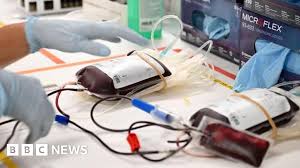
The new policy applies specifically to autologous blood transfusions. This is a procedure where a patient donates blood in advance of a scheduled surgery for their own use.
What Medical Experts Say
Medical experts note that such blood can typically be collected between six weeks and five days before a procedure . Autologous transfusions carry lower risks of adverse reactions since the body recognizes its own blood, and there is no risk of infectious disease transmission from another donor .
What Remains Unchanged
Despite this shift, the organization’s core teaching on blood remains firmly in place.
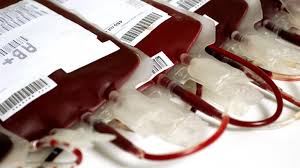
Jehovah’s Witnesses continue to prohibit receiving allogeneic blood transfusions—whole blood
A spokesperson for the organization emphasized this point, stating:
“Our core belief regarding the sanctity of blood remains unchanged. Both the Old and New Testaments command us to abstain from blood” .
The organization’s position is rooted in biblical passages, including Acts 15:20, which they interpret as requiring believers to “abstain from blood” .
This interpretation has historically been applied not only to dietary practices but to the medical use of blood in transfusions.
Lösch noted in his announcement that the Bible does not specifically address the use of one’s own blood in medical care, which provided the basis for allowing individual conscience to guide decisions on this matter .
Medical Procedures and Individual Conscience
The clarification brings autologous blood procedures into alignment with other medical interventions that Jehovah’s Witnesses have long accepted.
Procedures such as kidney dialysis, where blood is temporarily removed, filtered, and immediately returned to the body, were previously deemed acceptable because the blood was not “stored” .
Heart-lung machines and blood testing have similarly been permitted .
Under the new framework, members may now also consider preoperative autologous blood deposit (PAD) for later reinfusion.
This, hitherto was something prohibited.
However, the decision is left entirely to individual conscience, with the organization taking no position on which choice a member should make .
This approach is consistent with how the organization handles other medical decisions. Jehovah’s Witnesses generally accept the vast majority of medical treatments, including surgical procedures, anesthetic techniques, and various therapeutic agents .
The organization maintains a global network of over 2,000 Hospital Liaison Committees that help members navigate medical care in accordance with their beliefs while providing information to healthcare professionals about bloodless medicine alternatives .
Reactions to the Policy Change
News of the impending change circulated in advance on social media forums, prompting varied reactions from current and former members.
While some of the members of the association are yet to digest the new update, many have received this news with a lot of excitement, calling it a critical change coming at the right time.
According to organization figures, Jehovah’s Witnesses reported a U.S. membership of 1.3 million in 2025, with a worldwide membership of 9.2 million across more than 200 countries and territories.
Historical Context
The blood transfusion policy ranks among Jehovah’s Witnesses’ most distinctive and controversial teachings. It dates back to the mid-20th century.
The organization has previously issued nuanced clarifications. For example, it allows members to accept fractions of blood components. However, it still prohibits whole blood and its primary components.
In 2006, the organization reaffirmed its ban. It also encouraged members to seek alternatives from the emerging field of bloodless medicine. That field has since become more widely available.
Bloodless medicine programs use techniques like erythropoietin therapy to stimulate red blood cell production. They also employ surgical techniques to minimize blood loss. These programs initially developed to accommodate Jehovah’s Witness patients. Since then, they have gained broader acceptance in the medical community.
The organization’s Hospital Liaison Committees play a key role. They connect members with bloodless medicine programs. They also provide medical professionals with information on transfusion-free clinical strategies.
Legal and Ethical Implications
The policy change comes amid ongoing legal debates about the rights of Jehovah’s Witness patients, particularly minors, to refuse blood transfusions.
In December 2025, an Edinburgh court ruled that doctors could administer a blood transfusion to a 14-year-old Jehovah’s Witness girl if her life was at risk following surgery, despite her objections based on religious beliefs. Judge Lady Tait granted the order, stating she was satisfied it was in the child’s best interests while giving appropriate weight to her views .
Such cases demonstrates the complex intersection of religious freedom, parental rights, and medical ethics that has surrounded the organization’s blood policy for decades.
Looking Forward
For individual members, the new policy offers more healthcare options. It aligns with their faith, or at least reduces conflict between medical necessity and religious conviction.
For medical professionals, the change adds another consideration. It joins many other options for providing care within patients’ religious constraints.

