



Zuckerberg Testifies in Landmark Social Media Addiction Trial
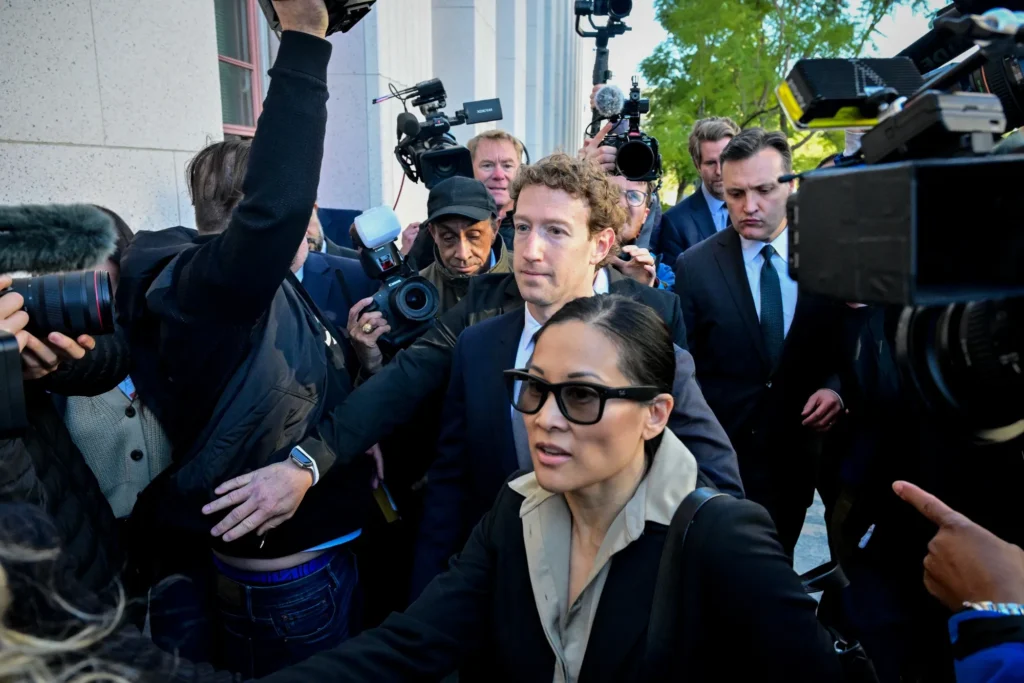
Meta CEO Mark Zuckerberg appeared in a Los Angeles courtroom this week to defend his company against allegations.

His company is accused of knowingly targeted young users with addictive platforms, marking his first-ever testimony before a jury.
A Trial With High Stakes
The trial, which also names Google’s YouTube as a defendant, stems from a lawsuit claiming that social media companies deliberately design features that hook children, leading to mental health issues.
The case is being closely watched as it could set a precedent for thousands of similar lawsuits filed by families and school districts across the United States.
Internal Documents Take Center Stage
During cross-examination, plaintiff’s attorney Mark Lanier confronted Zuckerberg with internal Meta documents that appeared to contradict the company’s public stance on protecting minors.
One 2019 email from former deputy prime minister Nick Clegg, then Meta’s head of global affairs, warned Zuckerberg about “unenforced” age restrictions, stating it was “difficult to claim we’re doing all we can.”
Zuckerberg pushed back against the characterization of the documents, arguing that lawyers were taking internal communications out of context.
“You’re mischaracterising what I’m saying,” he told Lanier at one point.
“I’m not surprised that people internally were studying this.”
Grieving Parents Demand Answers
The courtroom saw emotional moments as the lead plaintiff, identified only as K.G.M., sat directly across from Zuckerberg.
The young woman began using Instagram at age nine. Bereaved parents also filled the limited seating, with more gathered outside holding photos of children they lost to suicide, which they attribute to social media addiction.
Lori Schott, whose daughter Annalee died at 18, challenged Zuckerberg directly from outside the courthouse: “These platforms can change. It wouldn’t take long to change the algorithmic content so kids aren’t killing themselves. Is it that hard to do, Mr. Zuckerberg?”
Meta’s Defense: Safety Tools and Context
Meta has maintained that it takes user safety seriously. The company points to tools introduced in 2018 that allow users to set daily limits and turn off notifications. However, internal documents revealed that only 1.1% of teens actually used the daily limit feature.
Zuckerberg acknowledged that teen users represent “less than 1%” of Meta’s ad revenue but defended the company’s efforts to study youth engagement.
He noted that internal research was part of ongoing efforts to improve platforms and highlighted Messenger Kids, a service designed for younger children that he said he uses with his own children.
What Comes Next
The trial, expected to last several weeks, will include testimony from former Meta employees who have since spoken out about company practices.
TikTok and Snapchat, also named in the lawsuit, settled before the trial began.

