
Russian Man’s Identity Revealed As Ghana Pursues International Arrest Warrant

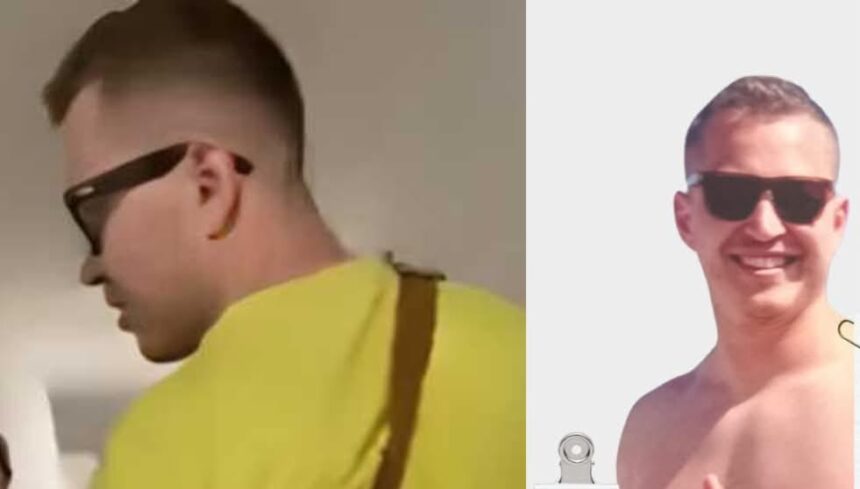
Ghanaian authorities have officially identified the primary suspect of the high-profile non-consensual intimate image scandal as Vladislav Aleksandrovich Liulkov, a 36-year-old citizen of the Russian Federation.
The confirmation, based on official passport documentation, has paved the way for the government to seek an international arrest warrant through INTERPOL.
The development resolves days of speculation regarding the perpetrator’s identity and nationality. The suspect’s official passport was published by the Minister for Communication, Digital Technology, and Innovation, Sam Nartey George, confirming his status as a Russian national.
According to the verified document, the passport bearing number 77 7784005 was issued by Russian authorities on December 9, 2025, and remains valid until December 9, 2035.
It lists the holder’s full name as Vladislav Aleksandrovich Liulkov, with a date of birth of September 19, 1989, making him 36 years old. The document also indicates his place of birth as the Uzbek SSR, formerly part of the Soviet Union.
From Diplomatic Scrutiny to Verified Identity
The confirmation lays to rest earlier doubts raised by the Russian Embassy, which had initially questioned whether the name circulating in local media corresponded to a known Russian identity.
Ambassador Sergei Berdnikov had previously suggested that the purported name was not a known Russian name. However, the verification of the official passport documentation has resolved those initial uncertainties, confirming the suspect’s citizenship.
The announcement was made during a joint press conference with the Ministry of Gender, Children and Social Protection, where ministers provided comprehensive updates on the government’s multi-pronged response to what has been described as an “atrocious” violation of privacy and dignity.
Government sources have confirmed that the Criminal Investigation Department (CID) is now actively pursuing an international arrest warrant through INTERPOL.
This move signals Ghana’s determination to bring Liulkov to justice, irrespective of his current location. Given the cross-border nature of the case, the government has activated diplomatic channels and international law enforcement cooperation.
Diplomatic Engagement and Legal Pathways
The verification of Liulkov’s nationality represents a pivotal moment in an investigation that has seen diplomatic engagement at the highest levels. Foreign Minister Samuel Okudzeto Ablakwa had earlier summoned Russian Ambassador Sergei Berdnikov on February 17 to formally register the Government’s strong displeasure over the alleged conduct.
In his response during that summons, the Russian Ambassador acknowledged receipt of the formal brief and confirmed that the information would be transmitted to authorities in Moscow.
He noted that while there is no extradition treaty between Ghana and Russia, the alleged conduct would also be considered criminal under Russian law.
The Ambassador assured Ghana of continued diplomatic cooperation.
The Ministers reaffirmed that while Ghana respects the sovereign legal processes of the Russian Federation, the government remains resolute in its constitutional duty to protect its citizens and will pursue all lawful avenues to ensure justice.
Support for Victims and Public Appeal
Amidst the international legal proceedings, the Ministry of Gender, Children and Social Protection has moved swiftly to establish a comprehensive support system for the victims whose lives have been impacted by the unauthorised publication of intimate images.
Speaking at the press briefing, Gender Minister Dr. Agnes Naa Momo Lartey disclosed that a dedicated victim support desk has been established, fully equipped with clinical professionals to provide psychological and emotional assistance.
“To victims affected by this act, the Gender Children and Social Protection Ministry has a victim support desk set up fully equipped with clinical professionals to provide all the psychological and emotional support you need. Be assured that all these will be done in confidence,” Dr. Lartey stated.
The Gender Minister has also issued a passionate appeal to the public to cease sharing the illicit material, warning that such actions compound the trauma experienced by victims and carry their own legal consequences.
“I will urge us to stop sharing the pictures and the videos. It is not good; you might think that it is fun sharing it, but from where I sit, people can lose their lives because of that. Their entire future can be wiped away because of that,” Dr. Lartey said during an interview on the sidelines of the African Union Summit in Addis Ababa.
The minister lamented the naivety that can make young people vulnerable to exploitation while emphasising that victim-blaming has no place in the national conversation about this incident. “People fall, but the good thing is that they gather the courage to rise again. Let’s give these people the opportunity to rise,” she pleaded.
Legal Ramifications
Authorities have reminded the public that under Ghana’s Cybersecurity Act 2020, anyone who publishes explicit images of adults without full consent can face up to 25 years in prison. The public is urged to refrain from sharing or redistributing the illegal material, as such actions constitute criminal offences under Ghanaian law.
As the investigation progresses, authorities have urged any additional victims who have not yet come forward to contact the Ministry of Gender’s support desk, where they will receive confidential assistance and professional care. The government has further pledged to continue providing updates as diplomatic and law enforcement efforts advance.

