


Tragedy in the Sahel: Seven Ghanaian Traders Killed in Burkina Faso Terror Attack
The Ghanaian government has confirmed the death of seven citizens following a terrorist attack in northern Burkina Faso, as regional security concerns mount.
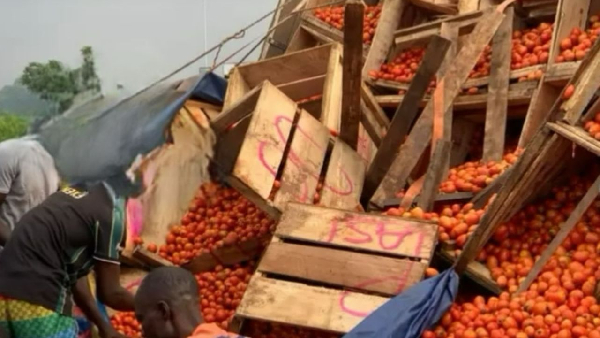
Interior Minister Muntaka Mohammed Mubarak has confirmed that seven Ghanaian tomato traders lost their lives in a terrorist attack that occurred in the town of Titao, located in northern Burkina Faso, last Saturday.
The assault, carried out by armed fighters on February 14, specifically targeted a truck carrying a group of 18 Ghanaian traders.
Minister Mubarak disclosed in a radio interview that the vehicle transported ten men and eight women. When the attackers struck Titao, they systematically separated the male residents and travelers from the females and opened fire.
The assault resulted in the deaths of seven men, while three other men sustained injuries. One woman also suffered serious injuries, though the remaining seven women escaped without significant physical harm.
“The jihadists ran into the town and started rounding up almost everybody, especially the males,” Minister Mubarak explained.
“They separated the males from the females and went on the street and sprayed, killing almost all the males.”
DNA Testing and Identification Process
Following the attack, the condition of the deceased deteriorated rapidly due to the climate and circumstances. The Minister stated that he maintained direct contact with his Burkinabè counterpart, leading to an agreement on February 15 to proceed with burials the following morning.
Due to the ongoing insecurity in the Titao region, officials from Ghana’s diplomatic mission in Ouagadougou could not travel to witness the burials.
To ensure accurate identification, Burkinabè authorities agreed to a critical procedure: collecting DNA samples from the victims prior to burial. This measure aims to provide a formal and reliable confirmation of each victim’s identity.
The surviving women, who travelled with the deceased, have already provided officials with names, and they are expected to attend the burial to document the proceedings photographically on behalf of the mission.
“We have lists. The women who went with them knew who were there, who had lost their lives, who are alive and receiving treatment,”
Mr. Mubarak stated. “We do not want to mix it up, so that is why we are working with DNA to do some confirmations.”
Repatriation Efforts and Government Appeals
The Burkinabè military is coordinating an escort to bring the surviving and injured Ghanaians from Titao to the capital, Ouagadougou.
Officials from the Ghana Embassy will receive them there and begin planning their return home.
In a heartfelt appeal to the public, Minister Mubarak pleaded with citizens to stop sharing graphic images and videos of the attack’s aftermath on social media.
He warned that many families are discovering the fate of their loved ones through these distressing online posts before receiving official notification.
He cited a specific case where relatives saw images of a deceased woman online before authorities could contact them.
“Please, for heaven’s sake, do not be sharing it, do not be posting it,” Mr. Mubarak urged.
“Put yourself in the shoes of their families. If this is posted, that your loved one is dead, and this is how bad his body is, will you be happy?”
Authorities are currently working to confirm the identities of all deceased and injured individuals and have requested patience from the public before releasing names.
A Regional Security Crisis
The Interior Minister used the opportunity to highlight the broader security crisis gripping the Sahel region. He noted that such attacks claim an estimated 80 lives daily across approximately 44 separate incidents.
He referenced a recent security summit convened by President John Mahama in Accra, which brought together security chiefs, foreign ministers, and heads of state from Mali, Liberia, and Ghana to formulate a collective response.
“This is something that no one can deal with alone,”
Mr. Mubarak concluded. “Our citizens are intermarried, they intertrade, they will move. So let us work together to deal with this as a sub-region.”

